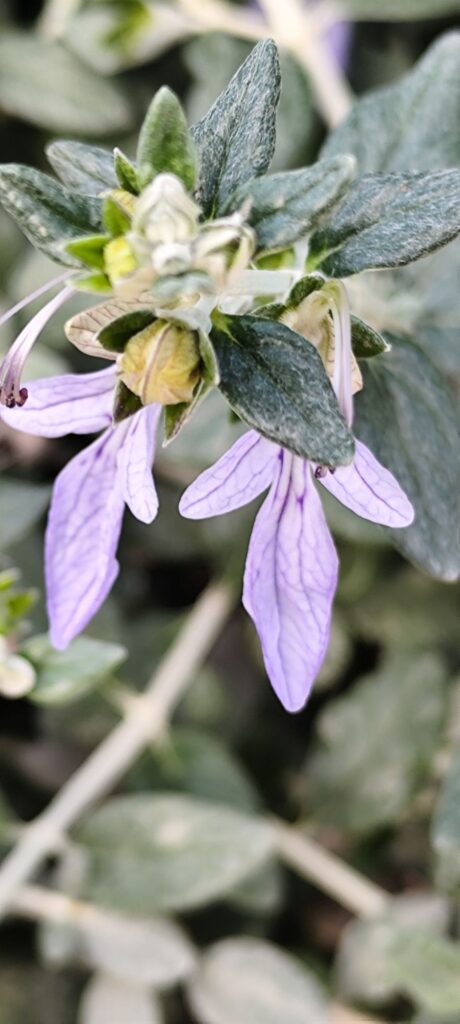
Overview of Teucrium fruticans
Teucrium fruticans, commonly known as shrubby germander, olivilla, or salvia amarga, is an evergreen Mediterranean shrub valued for its silvery foliage and soft blue flowers. It is widely used in ornamental gardening due to its drought tolerance, neat appearance, and adaptability to pruning.
This species is especially appreciated in warm climates for its low maintenance and year-round decorative value.
Natural Origin and Distribution
Teucrium fruticans is native to the western Mediterranean region, including southern Europe and North Africa. It naturally grows in dry hillsides, rocky terrain, and coastal areas.
Its adaptation to sun, wind, and poor soils makes it well suited to Mediterranean-style landscapes.
Physical Characteristics
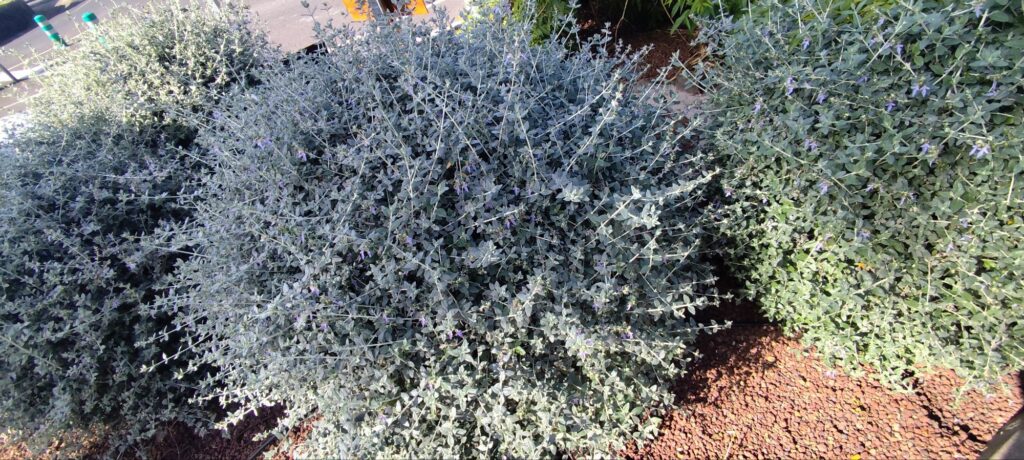
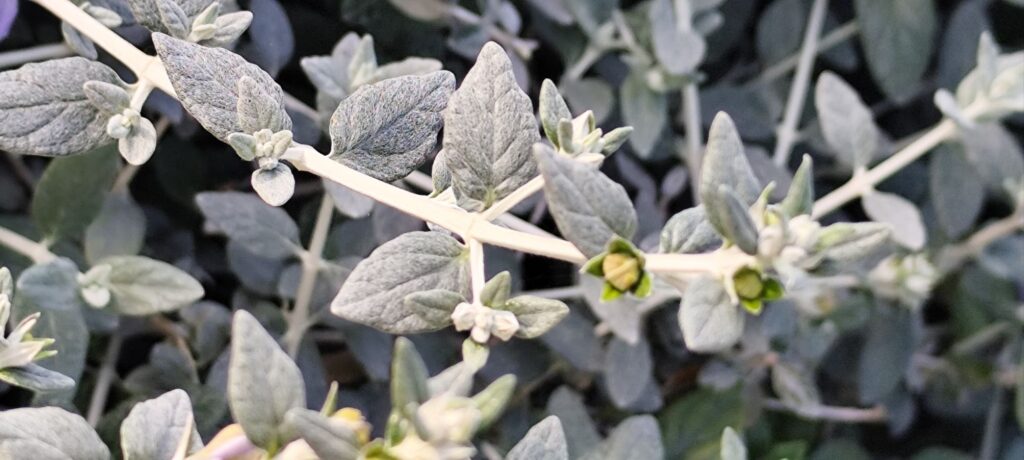
This plant forms a dense, rounded shrub with woody stems and narrow, oval leaves. The leaves are grey-green to silvery in color, with a soft, slightly velvety texture.
The flowers are pale blue to violet, tubular in shape, and borne at the tips of branches, adding subtle color contrast to the foliage.
Flowering and Seasonal Interest
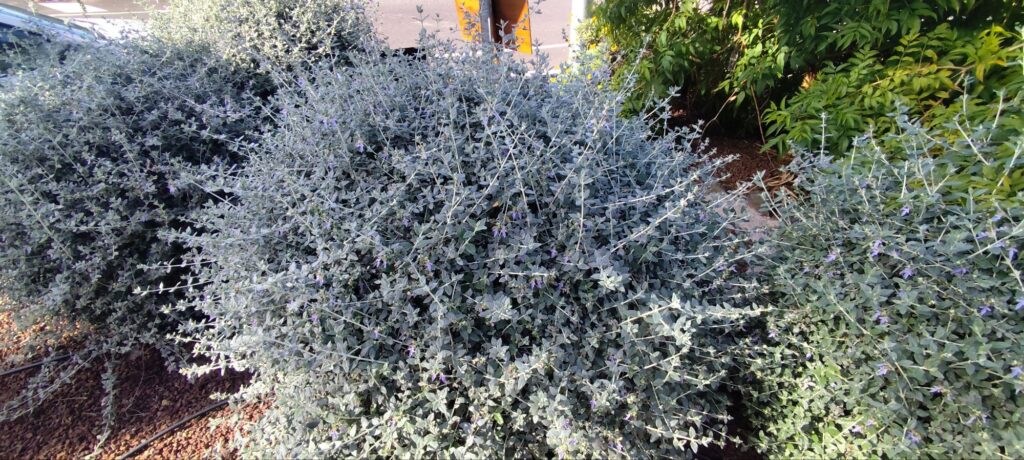
Teucrium fruticans typically flowers from late winter through spring, with occasional blooms appearing at other times of the year in mild climates.
The combination of silver foliage and blue flowers provides gentle but elegant seasonal interest.
Growth Habit and Development
This species has a moderate growth rate and can reach heights of 1.5 to 2 meters if left unpruned.
It responds very well to pruning and is often shaped into hedges, rounded shrubs, or formal forms.
Climate and Light Requirements
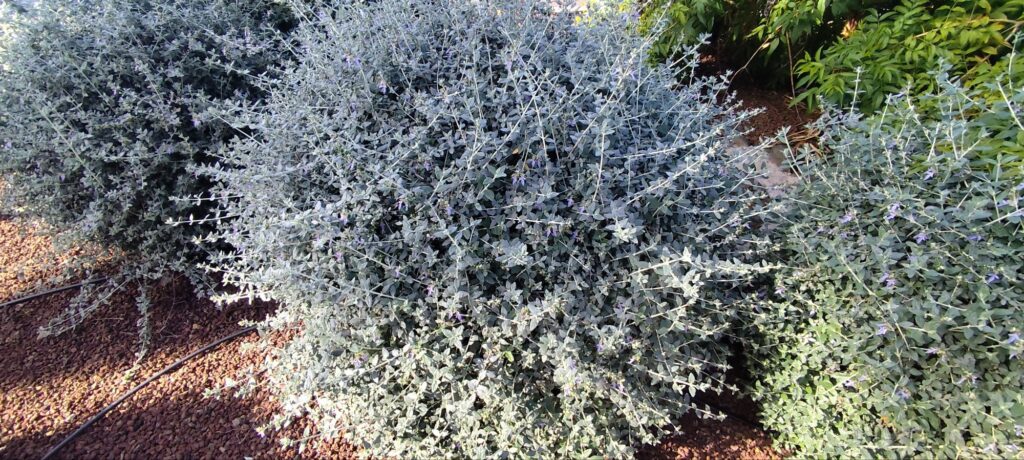
Teucrium fruticans thrives in warm, dry climates and prefers full sun exposure. Full sun enhances foliage color and compact growth.
It tolerates wind, salt spray, and light frost but may suffer damage in severe cold.
Soil Preferences
Well-drained soil is essential. This shrub performs best in sandy, rocky, or calcareous soils.
It tolerates poor soils and does not require high fertility.
Water Requirements
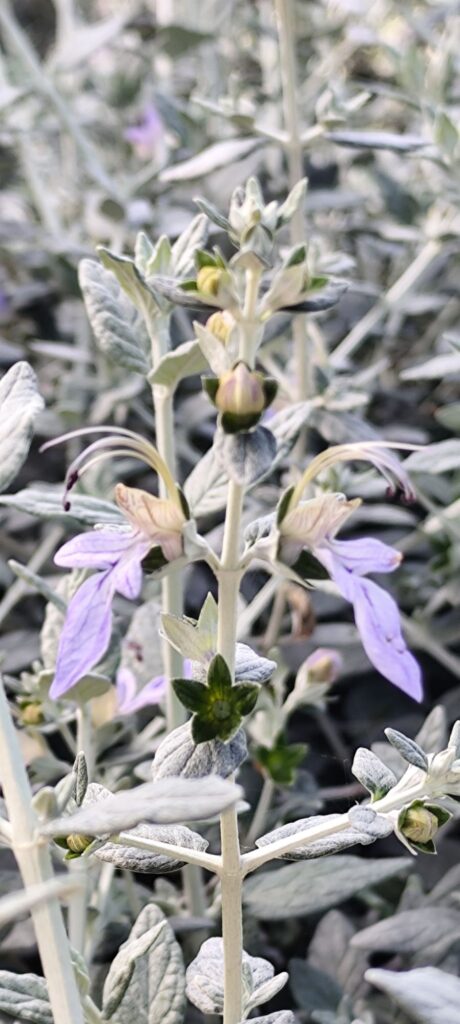
Once established, Teucrium fruticans is highly drought-tolerant. Watering should be infrequent, allowing the soil to dry between watering cycles.
Excessive moisture should be avoided.
Maintenance and Care
This is a low-maintenance plant. Regular pruning helps maintain shape and encourages dense growth.
Pruning is best done after flowering or during mild seasons.
Safety Notice
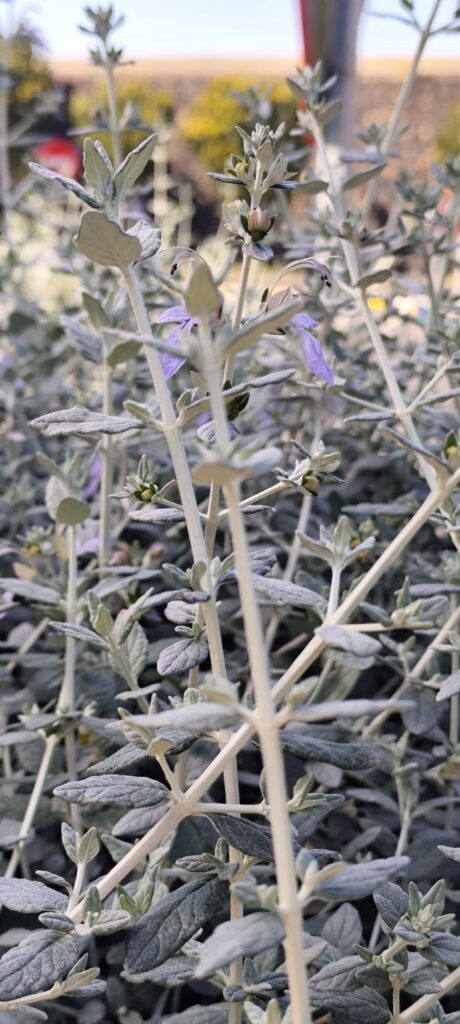
Teucrium fruticans is grown strictly for ornamental purposes. It should not be consumed or used for medicinal applications.
Standard gardening care is sufficient when handling the plant.
Uses in Landscaping
This species is widely used in hedges, borders, rock gardens, and coastal landscaping. It is suitable for both formal and informal garden designs.
Its tolerance to pruning makes it ideal for low hedges and structural planting.
Visual and Environmental Value
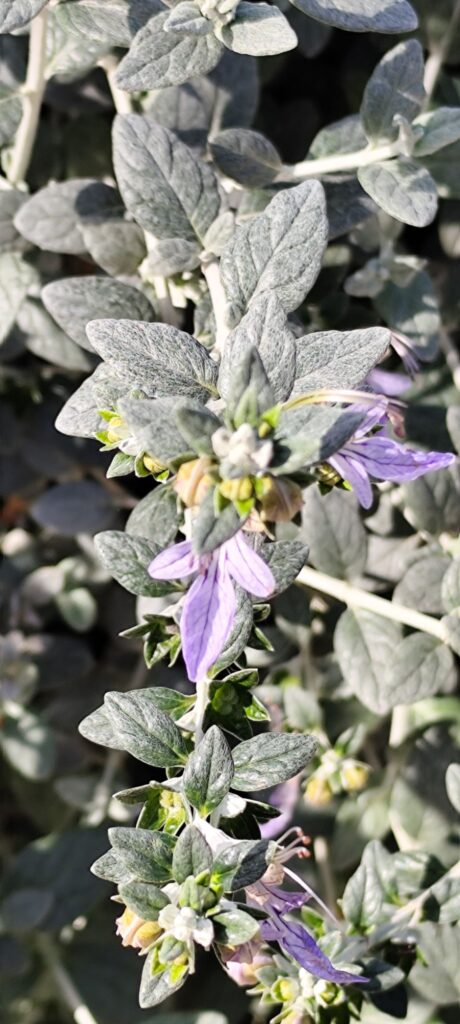
Visually, shrubby germander adds softness and brightness through its silver foliage and delicate flowers.
Environmentally, it supports water-efficient and low-input garden design.
Suitability for Gardens and Containers
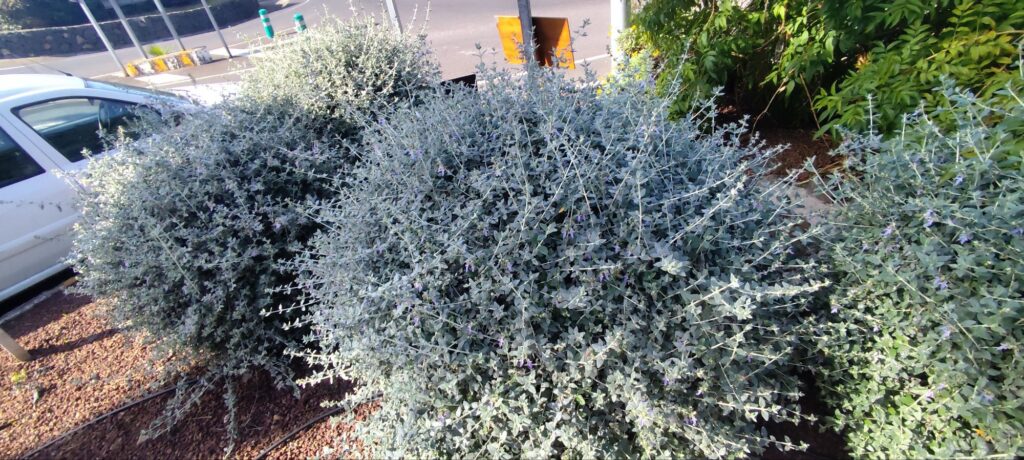
Teucrium fruticans is ideal for sunny gardens in Mediterranean and dry climates.
With full sun, excellent drainage, and occasional pruning, it can remain a long-lived and elegant ornamental shrub.