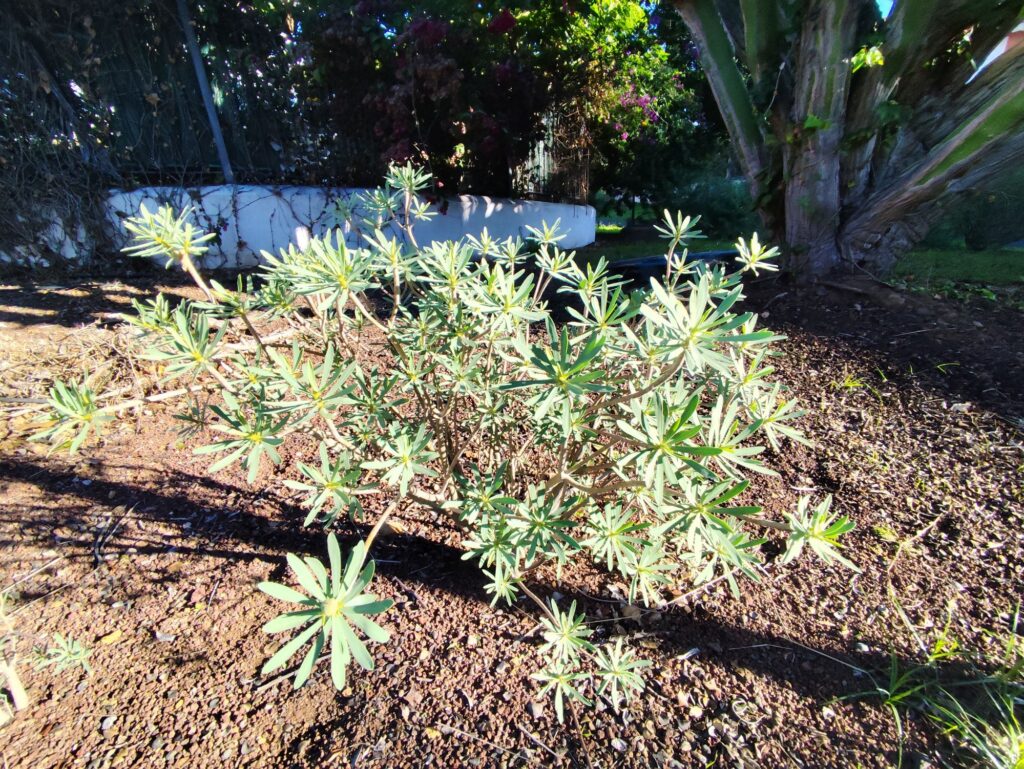
Overview of Tabaiba amarilla
Tabaiba amarilla is one of the most characteristic native plants of Tenerife and the Canary Islands. This tabaiba plant is a succulent shrub belonging to the Euphorbia genus and is especially well adapted to the dry, volcanic landscapes of the islands. It is widely recognized for its yellow-green coloration and its ability to survive in harsh environments where many other plants cannot thrive.
As an endemic species, Tabaiba amarilla plays an important role in Tenerife’s natural ecosystems. It is commonly found in coastal zones, lower mountain slopes, and arid areas shaped by intense sun, wind, and volcanic soils.
Natural Habitat and Distribution
Tabaiba amarilla is endemic to the Canary Islands, with a particularly strong presence on Tenerife. This tabaiba plant grows naturally at low altitudes, especially along the coast, in dry ravines, and on exposed volcanic terrain where rainfall is scarce.
It forms part of the typical coastal vegetation together with other drought-resistant native species. Its presence helps stabilize loose volcanic soil and contributes to the distinctive landscapes that define Tenerife.
Physical Characteristics
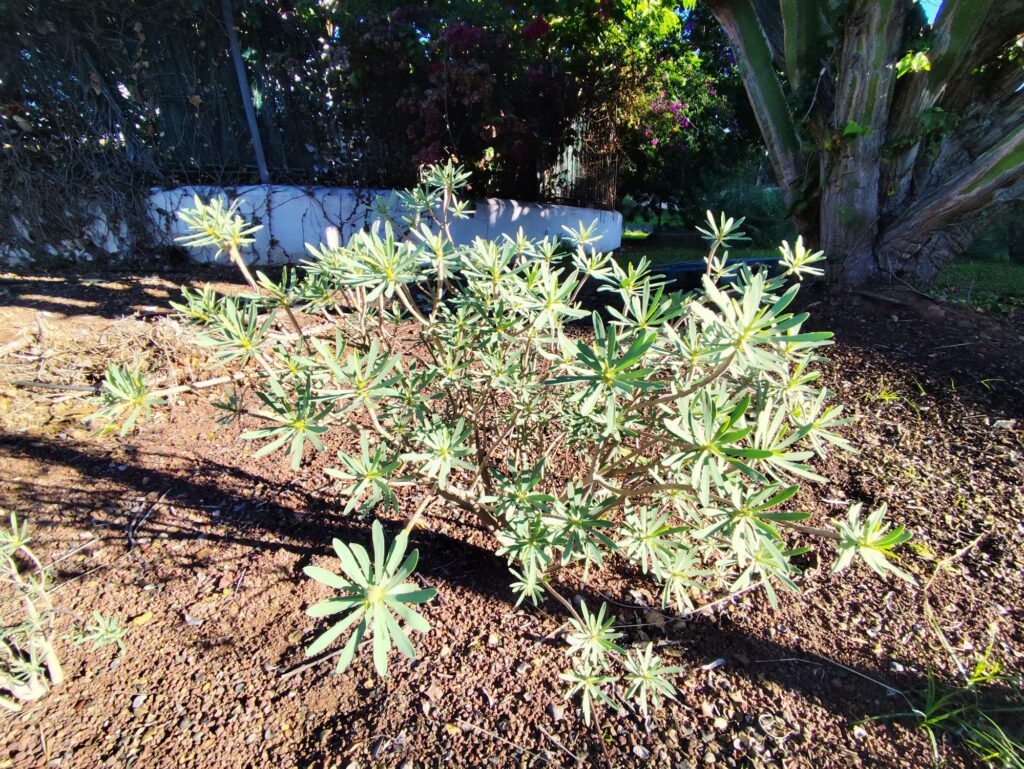
This tabaiba plant is a medium-sized shrub that can reach heights of up to 2 meters. It develops thick, fleshy stems that store water, allowing it to endure long dry periods. The plant branches densely, forming a rounded or irregular structure.
The leaves are elongated, smooth, and slightly pointed, displaying a distinctive yellow-green tone that gives Tabaiba amarilla its common name. During certain seasons, small yellowish flower structures appear at the tips of the stems.
Growth Habit and Adaptation
Tabaiba amarilla grows slowly but consistently in suitable conditions. Its succulent nature allows it to conserve water efficiently, making it extremely resilient in dry climates. During prolonged droughts, the plant may shed older leaves to reduce water loss.
The root system is well adapted to rocky and volcanic soils, anchoring the plant securely on slopes and exposed terrain. This adaptation makes the tabaiba plant especially suited to Tenerife’s volcanic environment.
Climate and Sunlight Requirements
This species thrives in warm, sunny climates and prefers full sun exposure. Tabaiba amarilla tolerates intense sunlight and high temperatures without damage, making it ideal for open, exposed locations.
The plant is sensitive to cold and does not tolerate frost. It is best suited to coastal and low-altitude areas with mild winters, such as those found across Tenerife.
Soil and Water Needs
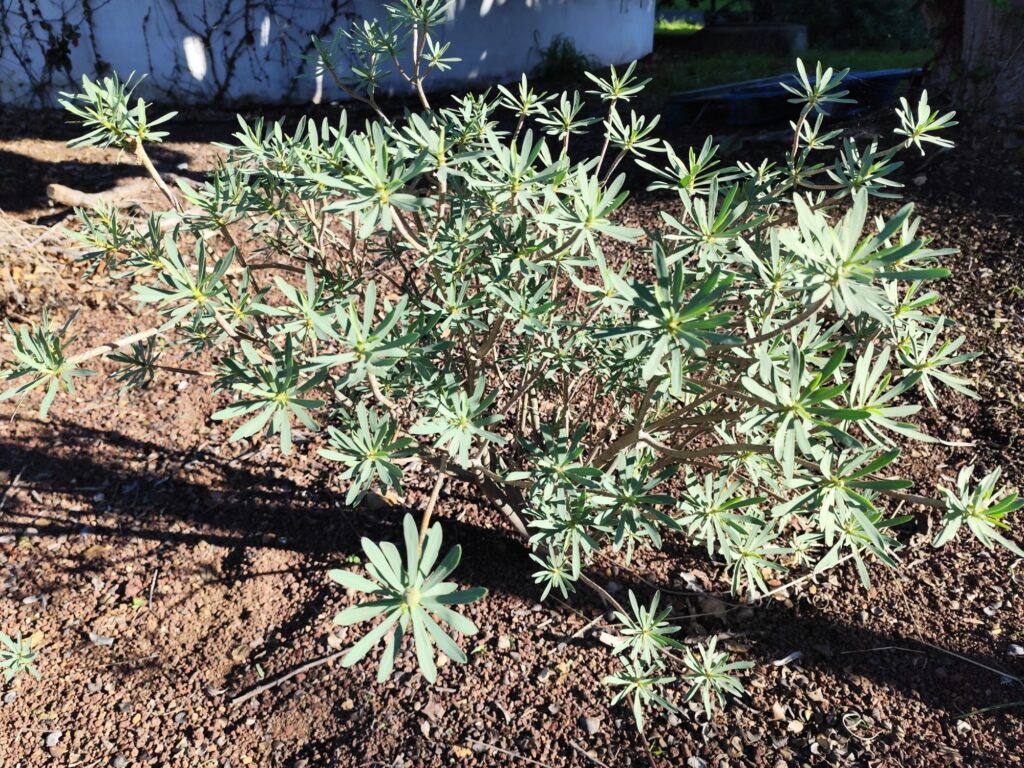
Tabaiba amarilla prefers well-drained soils, particularly sandy or volcanic substrates. Poor drainage should be avoided, as excess moisture can lead to root problems. The plant does not require nutrient-rich soil and thrives in mineral-heavy ground.
Once established, the tabaiba plant needs very little watering. Occasional irrigation during extended dry periods is sufficient. Overwatering is one of the most common causes of decline in cultivated specimens.
Maintenance and Care
Tabaiba amarilla is a low-maintenance plant that requires minimal care. Pruning is rarely necessary and should only be done to remove damaged or unwanted branches. Gloves are recommended when handling the plant.
It generally shows strong resistance to pests and diseases, making it well suited for sustainable landscaping and low-water garden designs.
Uses in Landscaping
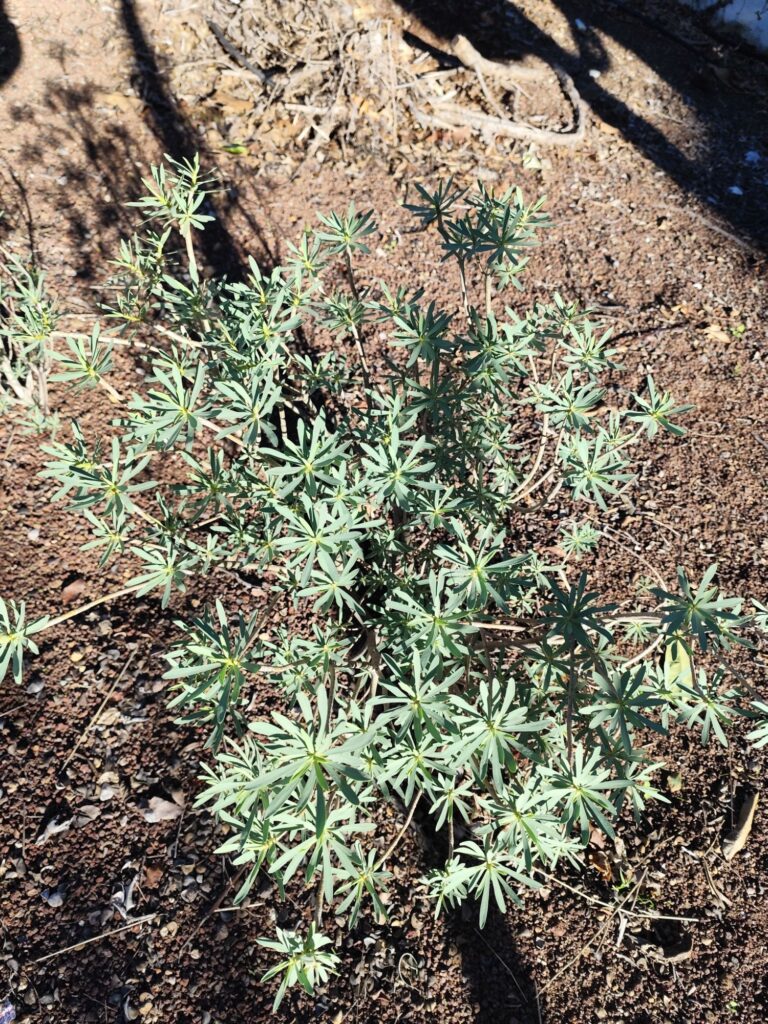
In Tenerife, Tabaiba amarilla is widely used in landscaping projects that aim to reflect the island’s natural character. It is commonly planted in public spaces, roundabouts, and private gardens focused on native or drought-tolerant vegetation.
Its sculptural form and distinctive color make it an excellent focal plant in xeriscaping and volcanic-style gardens, especially when combined with other endemic species.
Ecological Importance
This tabaiba plant plays an important ecological role by providing shelter for insects and helping prevent soil erosion in dry, exposed areas. As a native species, it contributes to the preservation of local biodiversity in the Canary Islands.
Protecting and cultivating endemic plants such as Tabaiba amarilla supports sustainable gardening practices and helps maintain the natural landscapes of Tenerife.
Scientific Name and Botanical Classification
The scientific name of Tabaiba amarilla is Euphorbia obtusifolia subsp. regis-jubae. It belongs to the Euphorbiaceae family, a group of plants adapted to dry and often challenging environments.
Safety Note
Like many Euphorbia species, Tabaiba amarilla produces a milky latex sap that can be irritating to skin and eyes. Direct contact should be avoided, and the plant should not be ingested. It is recommended to handle the plant with care, especially during pruning.
Suitability for Gardens in Tenerife
For gardens in Tenerife and similar climates, Tabaiba amarilla is an excellent choice. Its low water requirements, tolerance to intense sun, and minimal maintenance needs make it ideal for residential and public landscaping.
When planted in appropriate conditions, this tabaiba plant can thrive for many years, offering a strong visual connection to Tenerife’s unique natural environment.