Overview of Silybum marianum
Silybum marianum, commonly known as milk thistle or cardo mariano, is a robust annual to biennial plant admired for its striking variegated foliage and large purple flower heads. It belongs to the Asteraceae family and is easily recognized by its bold appearance and spiny structure.
Although widely known in traditional contexts, this article focuses on its botanical and ornamental characteristics.
Natural Origin and Distribution
Silybum marianum is native to the Mediterranean region, including southern Europe, North Africa, and parts of the Middle East.
It has naturalized in many temperate regions worldwide, commonly growing in fields, roadsides, and disturbed soils.
Physical Characteristics
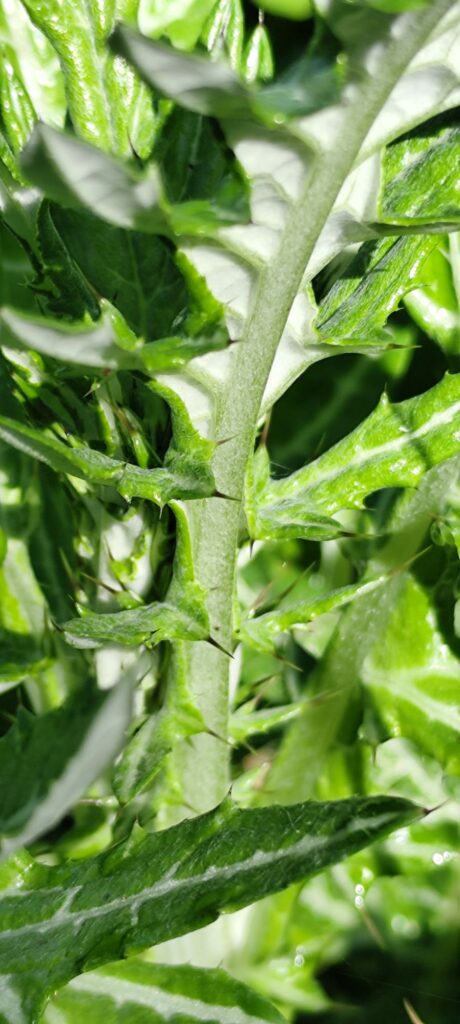
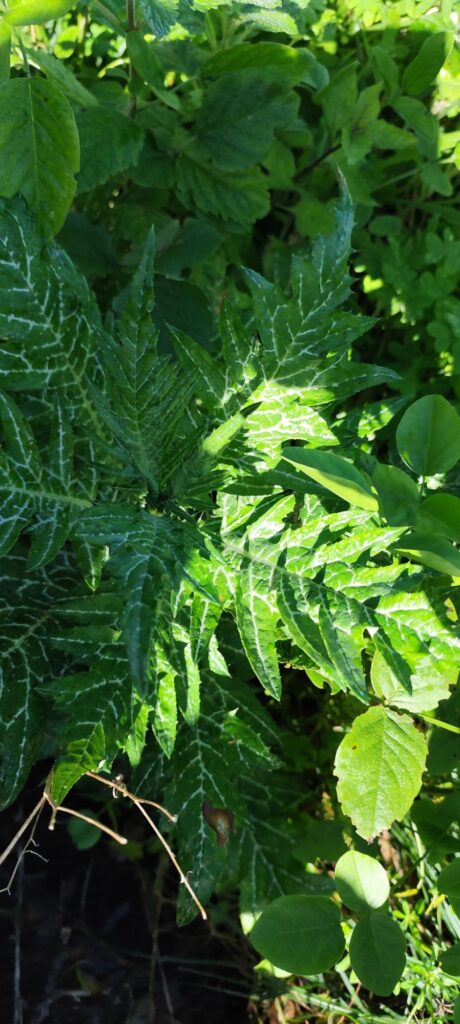
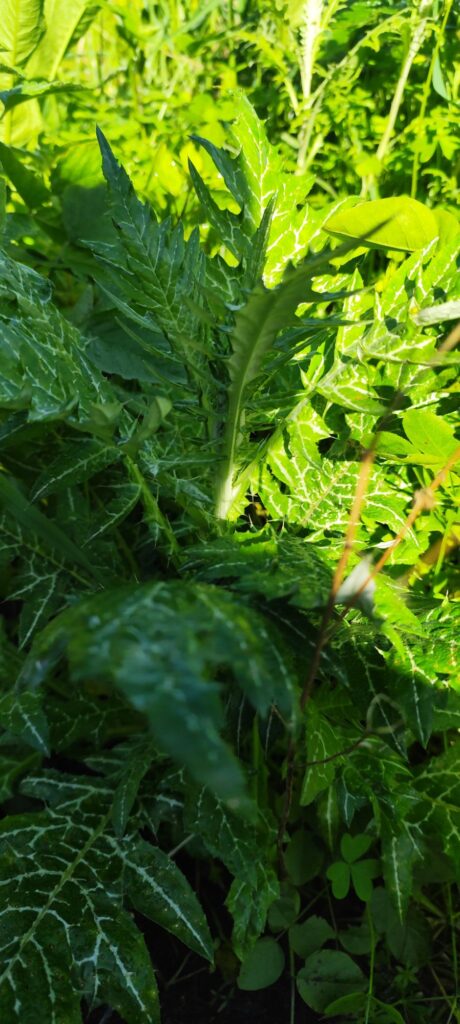
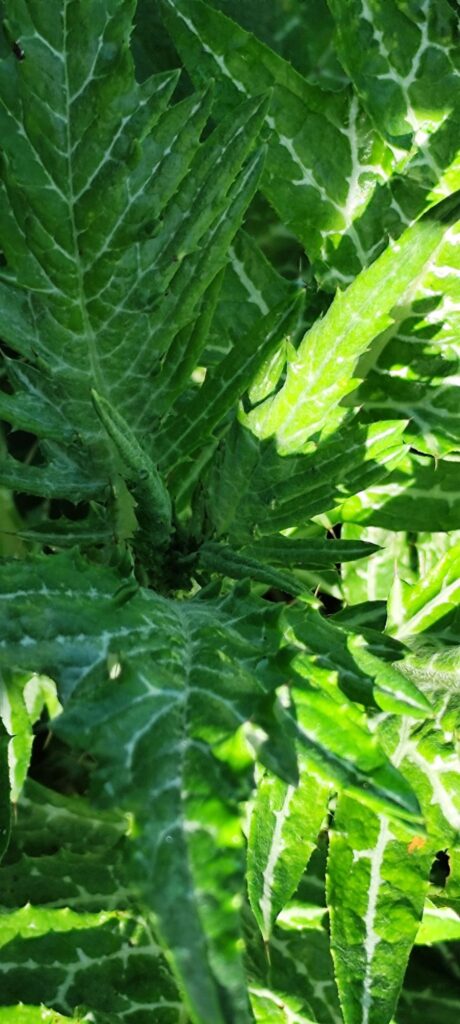
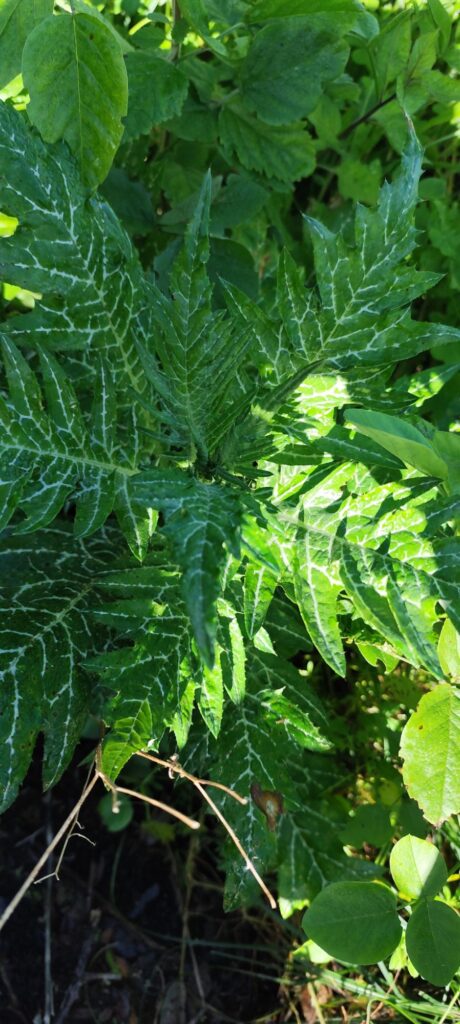
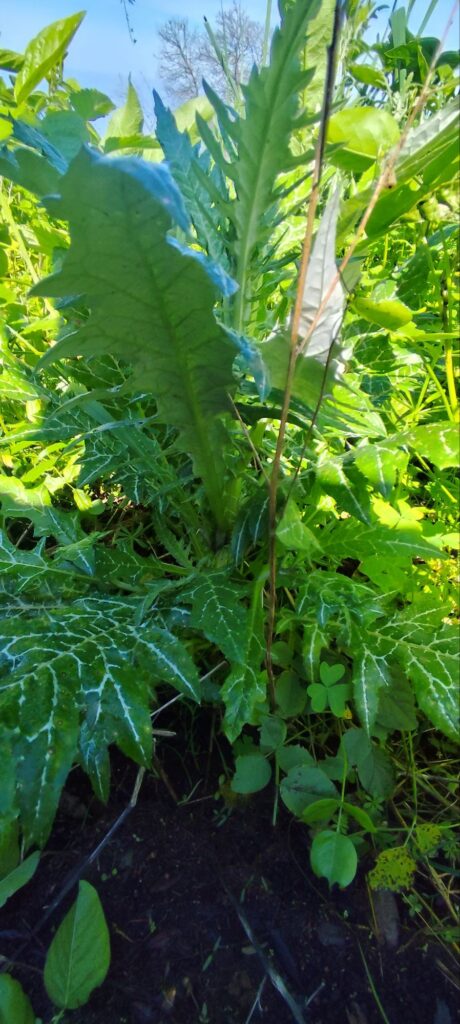
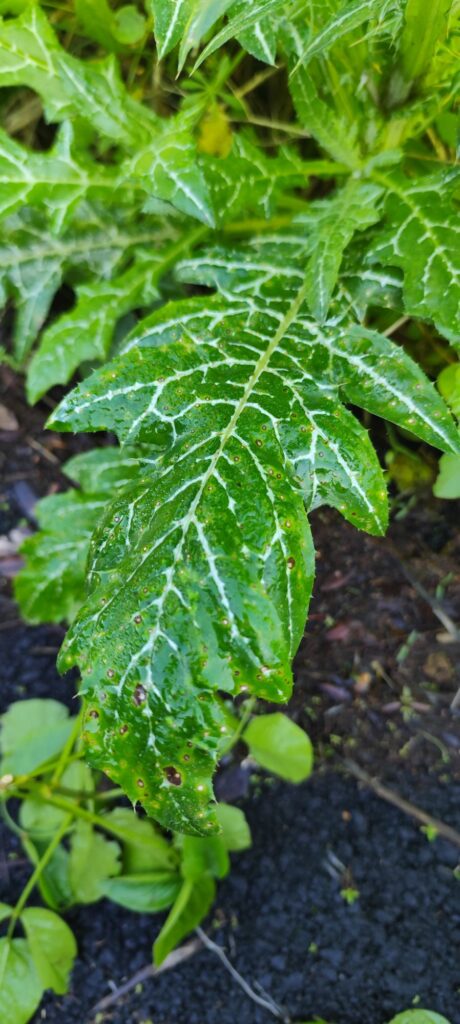
This plant forms a large basal rosette of glossy green leaves marked with distinctive white marbling. The leaves are deeply lobed and armed with sharp spines along the margins.
The flowering stems rise above the foliage and carry large, rounded flower heads with vivid purple florets surrounded by spiny bracts.
Flowering and Seasonal Interest
Flowering typically occurs in late spring to early summer. The dramatic flower heads provide strong visual interest and attract pollinating insects.
After flowering, the plant produces seed heads that remain decorative for some time.
Growth Habit and Development
Silybum marianum has a fast growth rate and can reach heights of 1 to 1.5 meters under favorable conditions.
As an annual or biennial, it completes its life cycle quickly and may self-seed readily in suitable environments.
Climate and Light Requirements
This species thrives in temperate to warm climates and prefers full sun exposure.
It tolerates heat and drought well but does not perform well in prolonged frost.
Soil Preferences
Silybum marianum adapts to a wide range of soils, including poor, rocky, and compacted soils.
Well-drained conditions are preferred, though the plant is highly tolerant of suboptimal soils.
Water Requirements
Watering should be moderate. Once established, the plant is drought-tolerant and requires minimal supplemental watering.
Excessive moisture should be avoided.
Maintenance and Care
This is a low-maintenance plant. It requires little care beyond space management due to its size and spines.
Protective gloves are recommended when handling the plant.
Safety Notice
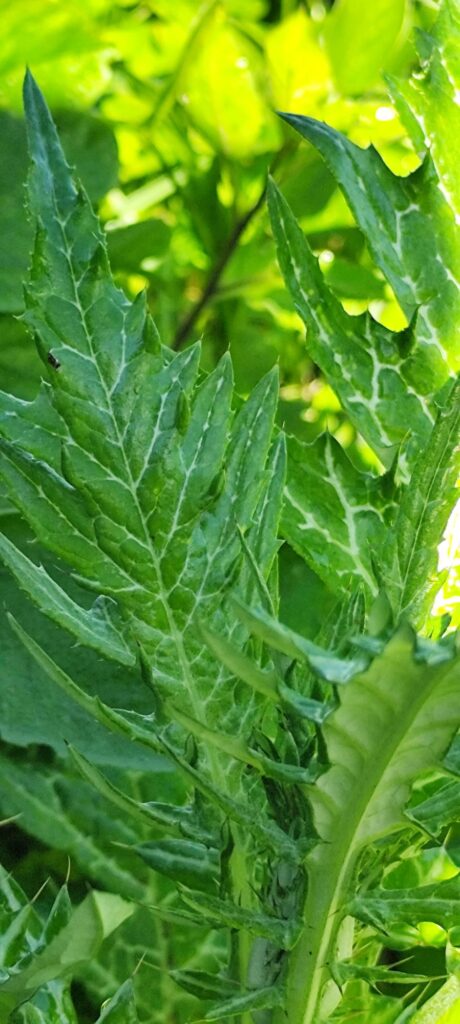
Silybum marianum has sharp spines that can cause injury. Care should be taken when planting near walkways or handling the plant.
This article does not recommend medicinal or dietary use.
Uses in Landscaping
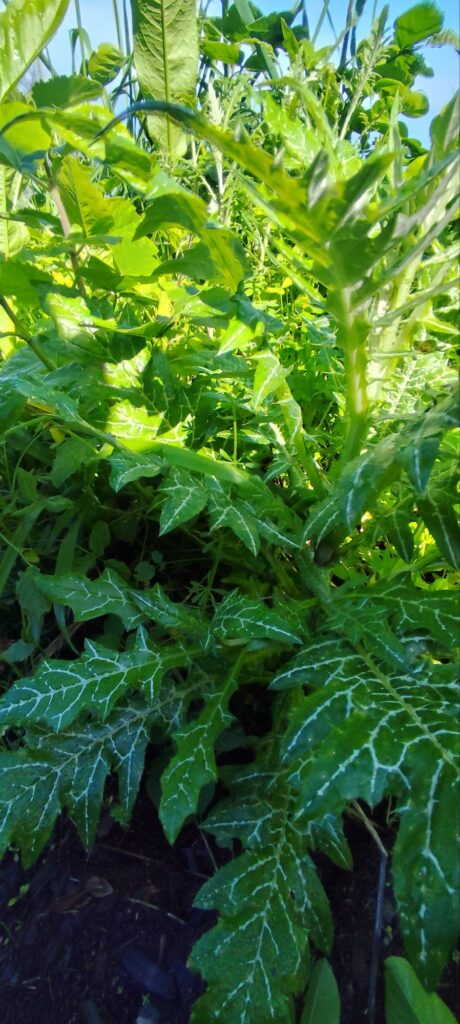
Milk thistle is occasionally used in naturalistic gardens, wildflower meadows, and educational or botanical plantings.
Its bold form makes it a strong accent plant in informal landscapes.
Visual and Environmental Value
Visually, the plant offers dramatic contrast through its marbled leaves and large purple flowers.
Ecologically, it provides nectar for pollinators and structure in open landscapes.
Suitability for Gardens
Silybum marianum is suitable for spacious gardens and naturalized areas where its size and spiny nature can be accommodated.
With full sun, minimal watering, and adequate space, it can become a striking seasonal feature.