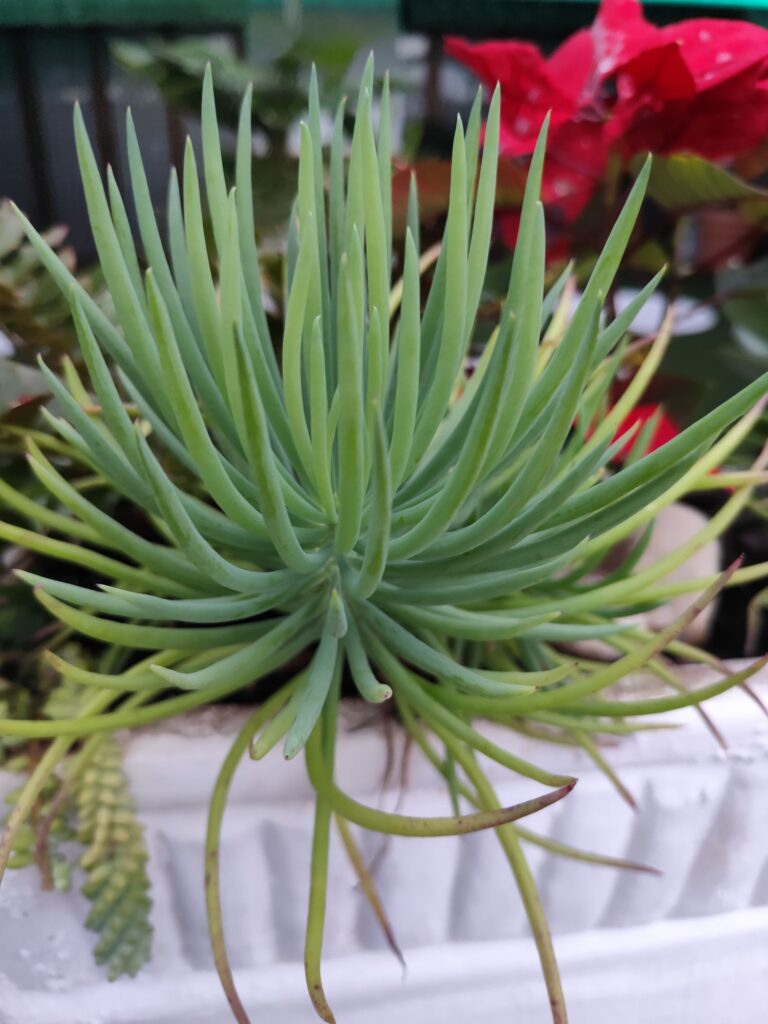
Overview of Senecio vitalis
Senecio vitalis, commonly known as blue chalk sticks, is a drought-tolerant succulent valued for its upright, finger-like leaves and striking blue-green coloration. It is widely used in warm-climate landscaping for its modern appearance, low water needs, and strong visual contrast.
This plant is especially popular in Mediterranean, coastal, and xeriscape gardens, where it provides structure and color with minimal maintenance.
Natural Origin and Distribution
Senecio vitalis is native to southern Africa, where it grows in dry regions with intense sunlight and well-drained soils. Its natural habitat includes rocky slopes and open areas with limited rainfall.
Due to its adaptability and ornamental appeal, it has been introduced and cultivated in many subtropical and warm temperate regions around the world.
Physical Characteristics
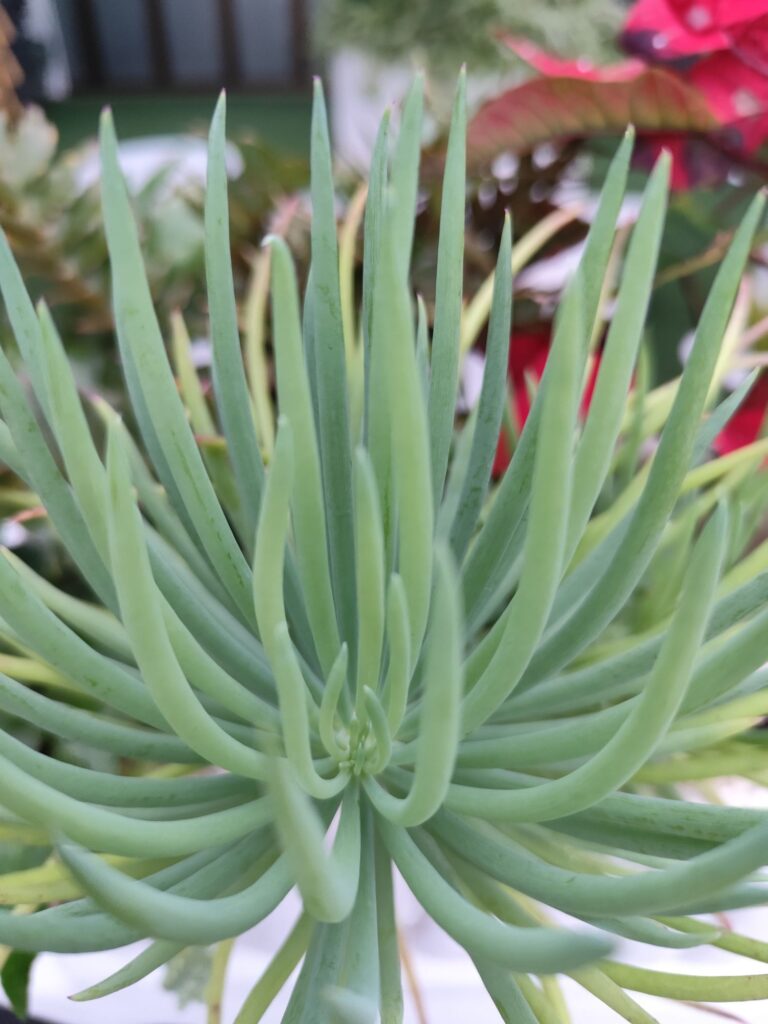
This species forms upright to slightly spreading clumps composed of cylindrical, elongated leaves resembling sticks or fingers. The leaves are smooth, fleshy, and typically display a blue to blue-green color, often enhanced by full sun exposure.
The plant usually reaches heights of 60 to 100 centimeters, creating a dense and architectural form suitable for modern garden designs.
Flowers and Seasonal Features
During the warmer months, mature plants may produce small, daisy-like yellow flowers at the tips of the stems. While the flowers are modest, they add seasonal interest.
The foliage remains the primary ornamental feature throughout the year, maintaining color and structure even outside the flowering period.
Growth Habit and Development
Senecio vitalis has a moderate growth rate and can gradually spread to form compact groups. Its upright habit distinguishes it from more trailing Senecio species.
With time, older stems may become woody at the base, contributing to the plant’s stability and longevity.
Climate and Light Requirements
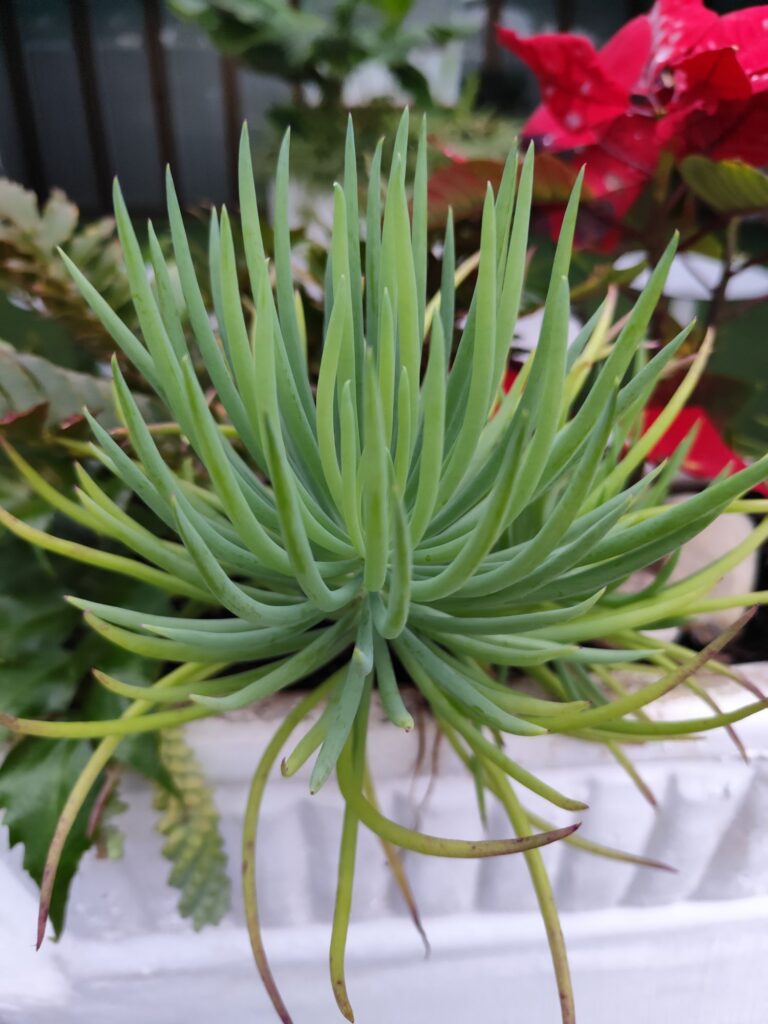
This plant thrives in warm, sunny climates and performs best in full sun. Bright light enhances the blue coloration of the leaves and promotes compact growth.
It is sensitive to frost and is best suited to frost-free regions or protected locations with mild winters.
Soil Preferences
Excellent drainage is essential for healthy growth. Senecio vitalis prefers sandy, rocky, or volcanic soils that allow water to drain quickly.
Heavy or water-retentive soils should be avoided, as they increase the risk of root problems.
Water Requirements
Once established, Senecio vitalis is highly drought-tolerant. Watering should be infrequent, allowing the soil to dry completely between watering cycles.
Overwatering is one of the most common causes of decline and should be avoided, especially in cooler seasons.
Maintenance and Care
This plant is very low-maintenance. Occasional removal of damaged or overgrown stems helps maintain a neat appearance.
Fertilization is rarely necessary, as the plant performs well in nutrient-poor soils.
Safety and Toxicity Notice
Senecio vitalis contains compounds that can be harmful if ingested. It should not be consumed or used for medicinal purposes.
Care should be taken when planting in areas accessible to pets or children.
Uses in Landscaping
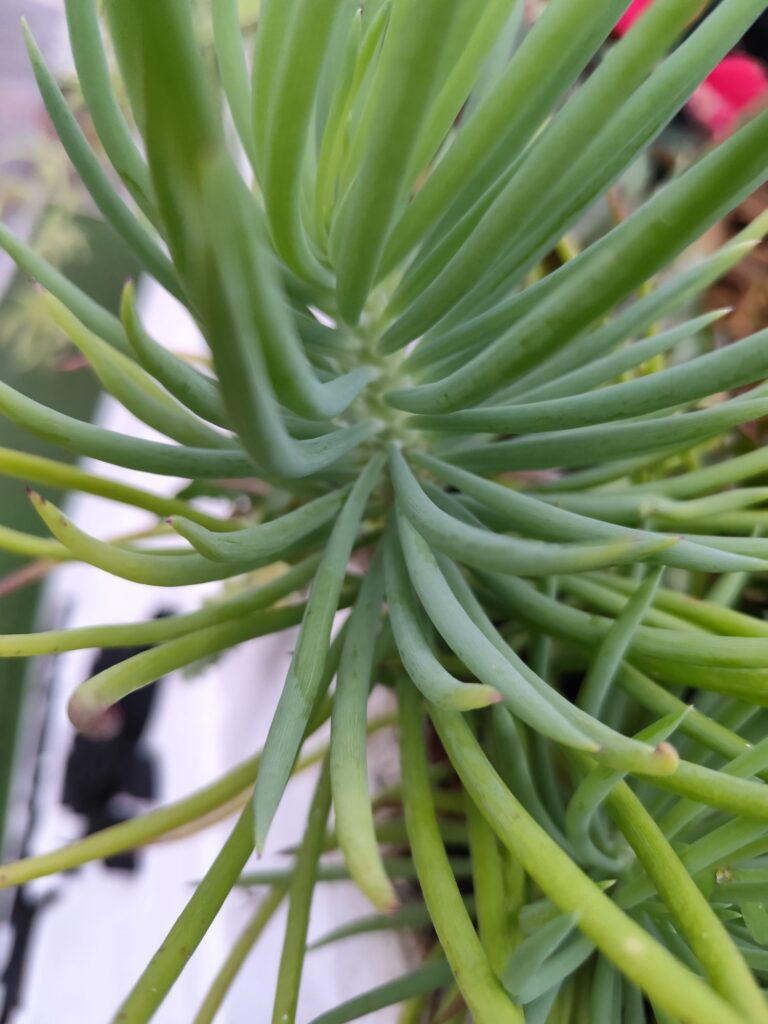
Senecio vitalis is widely used in dry gardens, rock gardens, and contemporary landscape designs. Its upright form makes it effective as a focal plant or in repeated groupings.
It pairs well with other succulents, cacti, and drought-tolerant plants, providing contrast in both color and texture.
Visual and Environmental Value
Visually, the plant adds a cool-toned, sculptural element to landscapes. Its blue foliage contrasts strongly with green or warm-colored plants.
Environmentally, it supports water-efficient landscaping and low-maintenance garden strategies.
Suitability for Gardens and Containers
Senecio vitalis is well suited to gardens and large containers in warm climates with excellent drainage.
With proper placement and minimal care, it can remain an attractive and durable feature in outdoor spaces for many years.