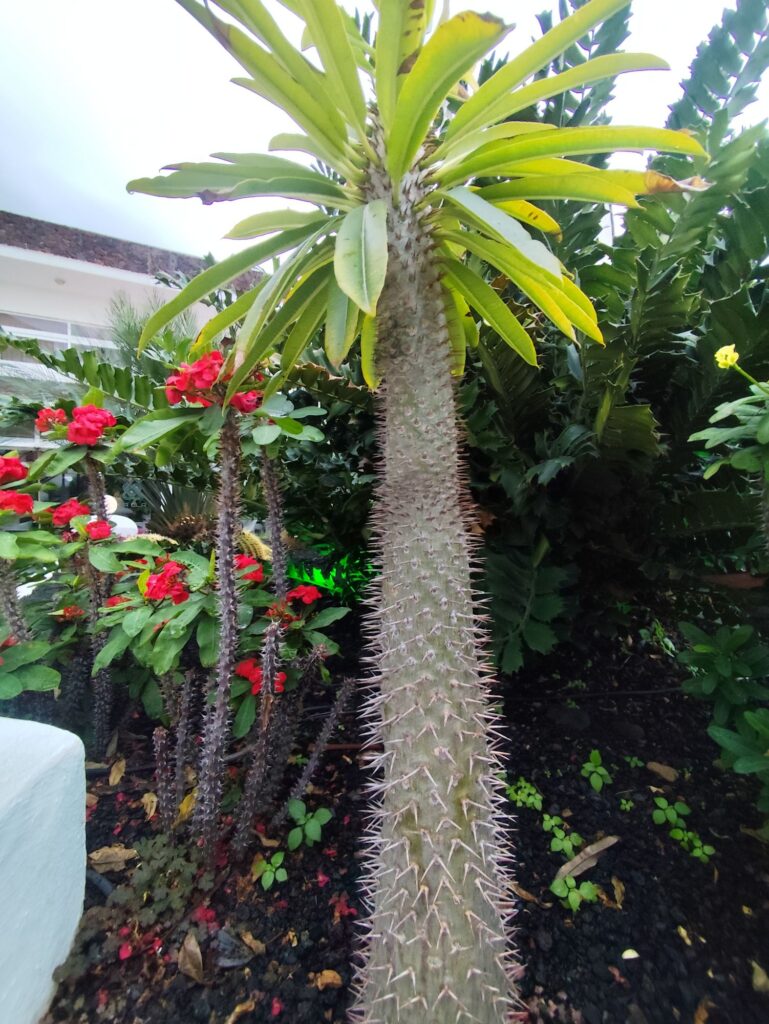
Overview of Pachypodium lamerei
Pachypodium lamerei, commonly known as the Madagascar palm, is a distinctive succulent plant recognized for its thick, spiny trunk and crown of narrow green leaves. Despite its common name, it is not a true palm but a succulent species adapted to dry environments.
This plant is valued for its sculptural appearance and is widely grown as an ornamental feature in warm climates and as a container plant in suitable conditions.
Natural Origin and Distribution
Pachypodium lamerei is native to Madagascar, where it grows in arid and semi-arid regions with intense sunlight and limited rainfall. In its natural habitat, it survives in rocky soils and exposed locations.
Due to its ornamental appeal and adaptability, it has been introduced to many subtropical and Mediterranean regions around the world.
Physical Characteristics
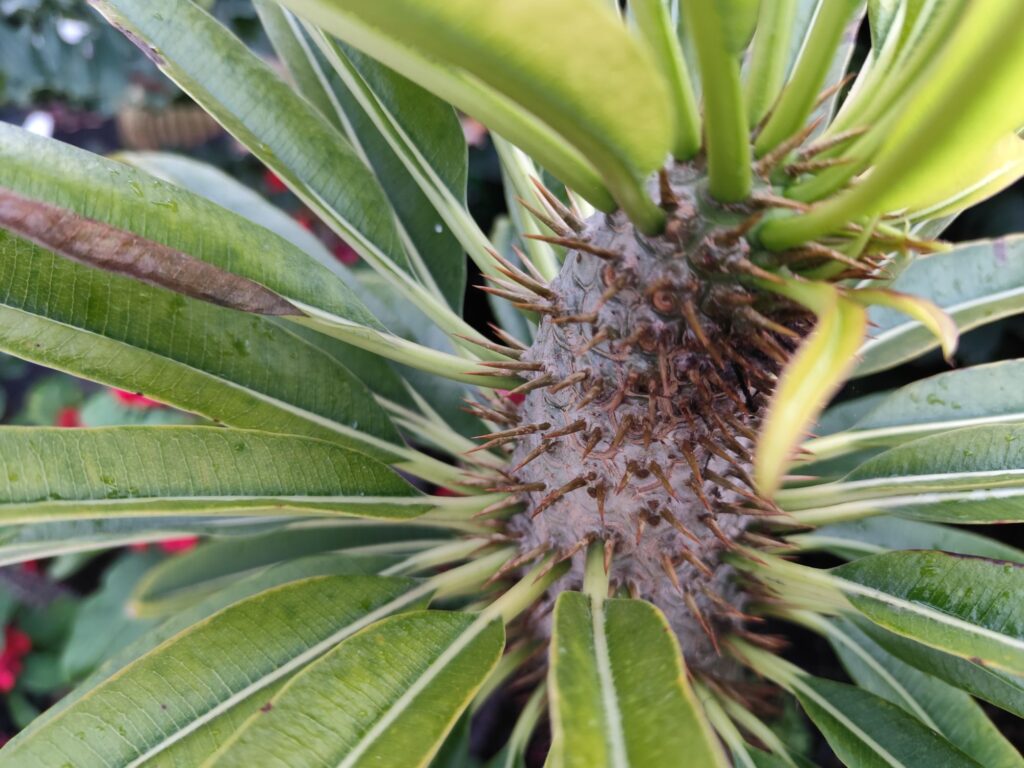
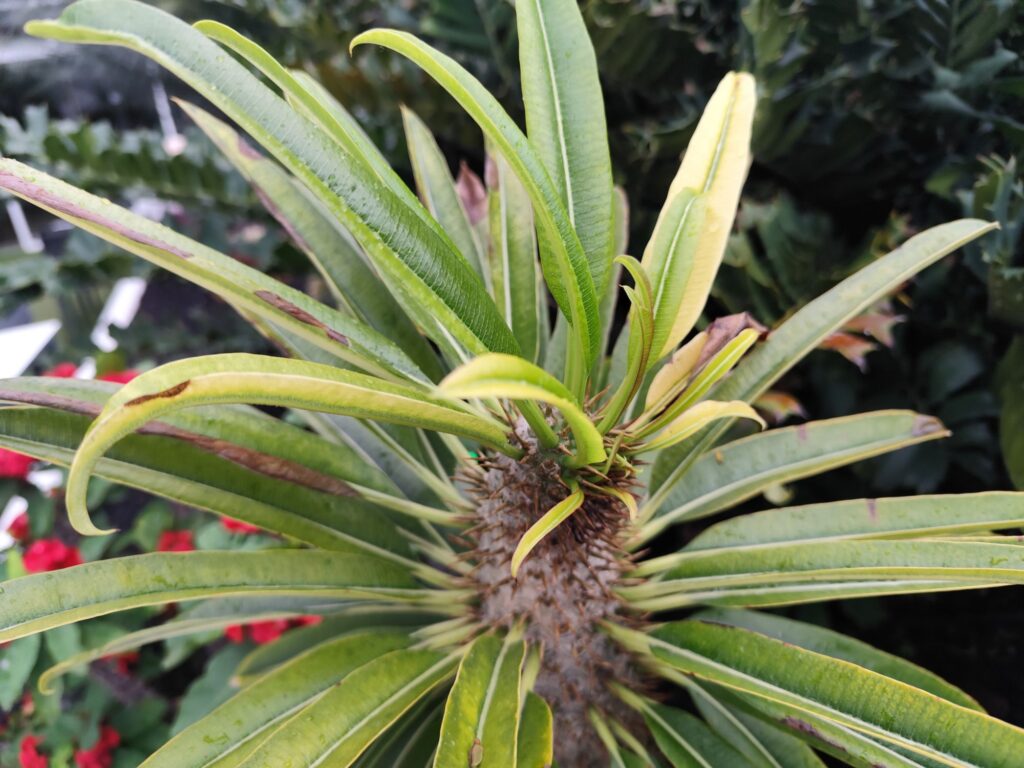
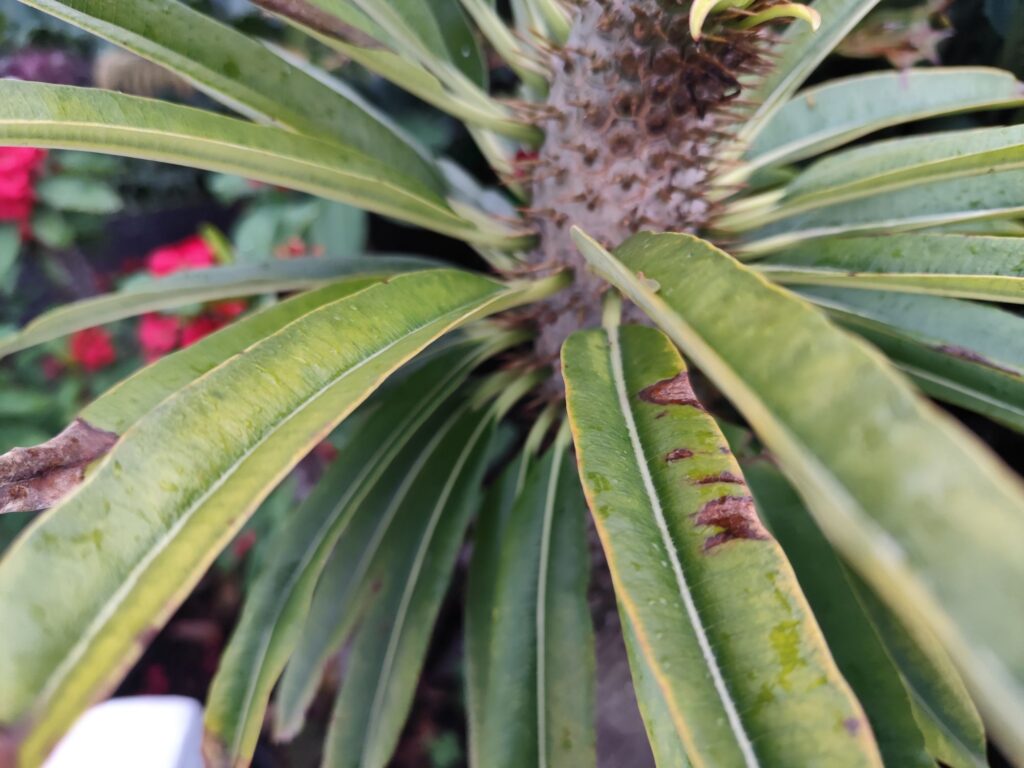
The plant develops a thick, columnar trunk that serves as a water-storage organ. The trunk is covered with sharp spines arranged in clusters, providing natural protection.
At the top of the trunk, a rosette of long, narrow, glossy green leaves forms, giving the plant a palm-like silhouette. In ideal outdoor conditions, it can reach heights of 4 to 6 meters over many years.
Flowers and Seasonal Interest
Mature Pachypodium lamerei plants may produce showy flowers, typically white with a yellow center. Flowering usually occurs in warm seasons and is more common in outdoor-grown specimens.
The flowers add ornamental value, though the plant remains visually striking even when not in bloom.
Growth Habit and Development
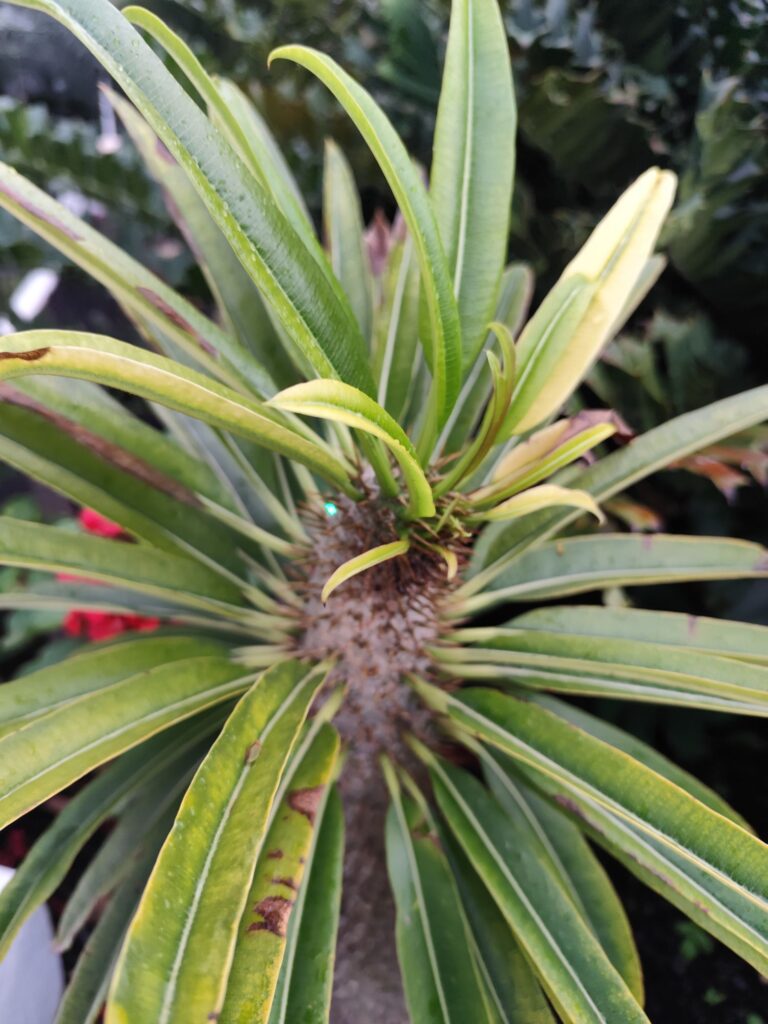
This species has a slow to moderate growth rate. During its early years, growth focuses on trunk thickening rather than height.
As it matures, the plant maintains a strong upright form with minimal branching, contributing to its bold architectural presence.
Climate and Light Requirements
Pachypodium lamerei thrives in warm climates and requires bright light to full sun for healthy growth. Adequate sunlight helps maintain a compact form and strong trunk.
The plant is sensitive to frost and should be protected from cold temperatures. It is best suited to frost-free regions or grown in containers that can be sheltered.
Soil Preferences
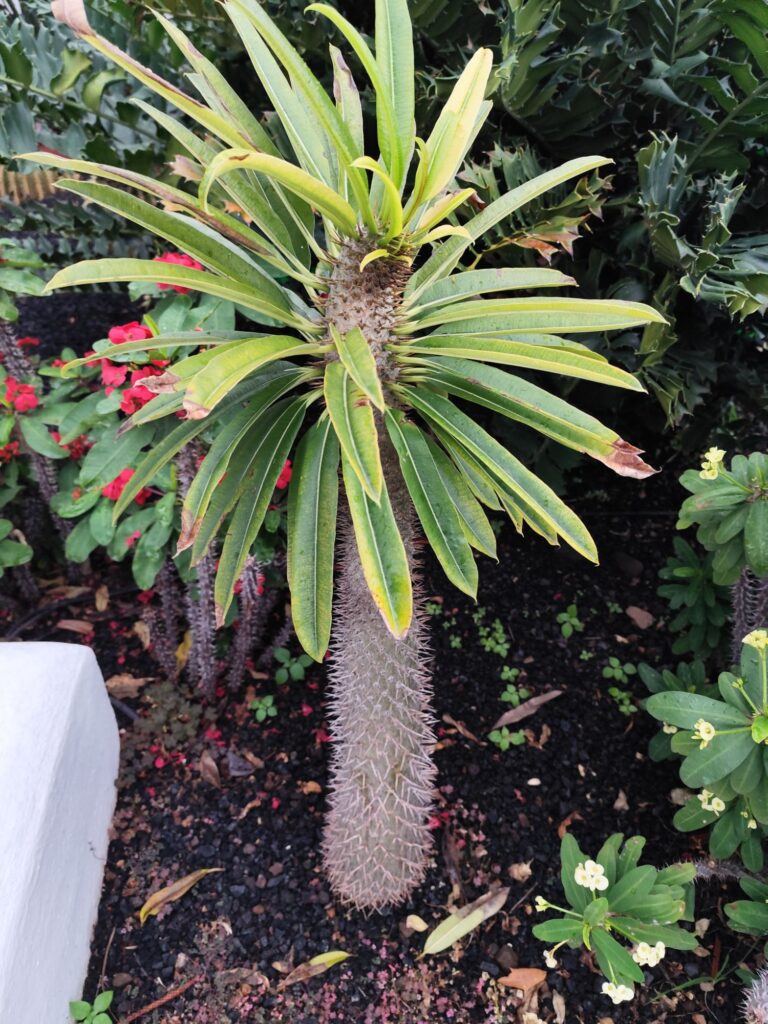
Well-drained soil is essential for this species. Sandy, rocky, or cactus-type soils are ideal, as they prevent excess moisture around the roots.
Poor drainage can lead to root problems, so heavy or compacted soils should be avoided.
Water Requirements
Watering should be moderate and infrequent. During the growing season, occasional deep watering is sufficient, allowing the soil to dry out between waterings.
In cooler periods, watering should be reduced significantly, as the plant enters a slower growth phase.
Maintenance and Care
Pachypodium lamerei is a low-maintenance plant when grown in suitable conditions. Pruning is rarely necessary, except to remove damaged leaves.
Due to the sharp spines, handling should be done carefully, and protective gloves are recommended.
Safety and Toxicity Notice
All parts of Pachypodium lamerei contain toxic sap that can cause irritation if handled improperly. The plant should not be ingested or used for medicinal purposes.
It should be placed thoughtfully in gardens or homes, particularly where children or animals are present.
Uses in Landscaping
This plant is commonly used as a focal point in dry gardens, modern landscapes, and Mediterranean-style designs. Its unusual form adds strong visual impact.
It is also popular as a container plant on terraces and patios in warm climates.
Visual and Environmental Value
Visually, Pachypodium lamerei adds a bold, exotic character to landscapes. Its upright form contrasts well with lower-growing or softer plants.
In suitable environments, it contributes to drought-tolerant and low-water landscaping strategies.
Suitability for Gardens and Containers
Pachypodium lamerei is best suited to warm, sunny locations with excellent drainage. It performs well in both open ground and large containers.
With proper care and placement, it can become a long-lasting and striking feature in gardens or outdoor living spaces.