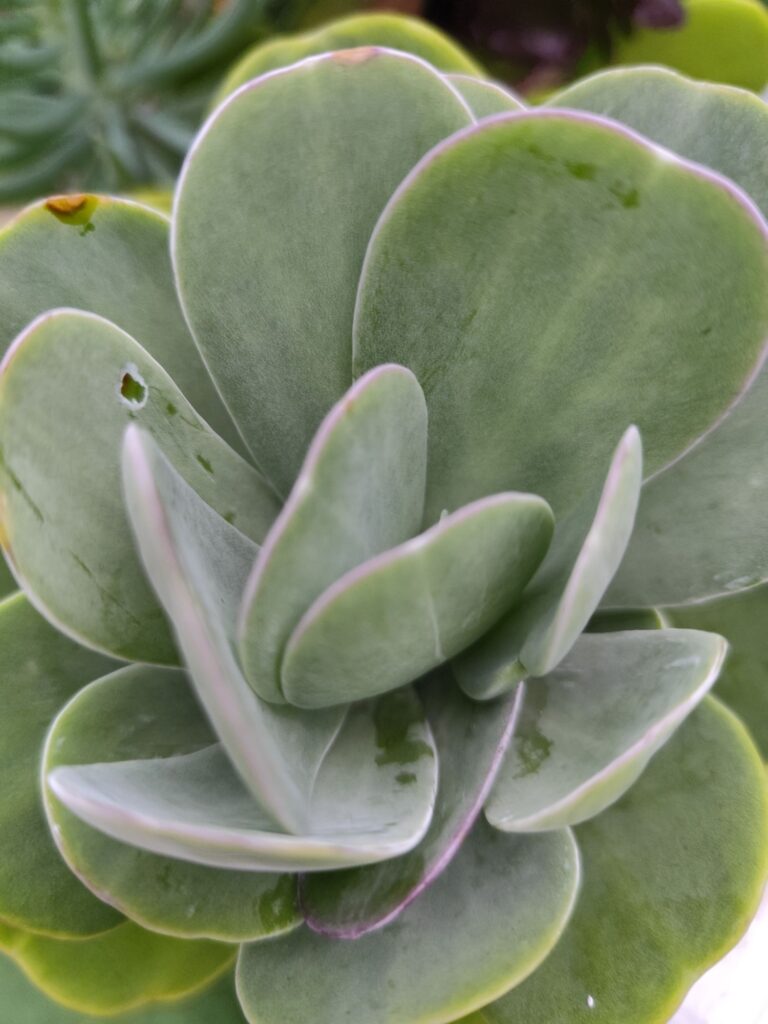
Overview of Kalanchoe luciae
Kalanchoe luciae is a bold and decorative succulent best known for its large, flat, rounded leaves arranged in a compact rosette. It is often admired for the intense red or pink tones that develop along the leaf margins when the plant is grown in strong sunlight.
This species is widely used in warm-climate landscaping and container planting due to its sculptural form, drought tolerance, and low maintenance needs.
Natural Origin and Distribution
Kalanchoe luciae is native to southern Africa, where it grows in open, sunny areas with rocky, well-drained soils. Its natural environment is characterized by strong light, seasonal rainfall, and periods of drought.
Through cultivation, it has become popular in Mediterranean, subtropical, and coastal regions around the world.
Physical Characteristics
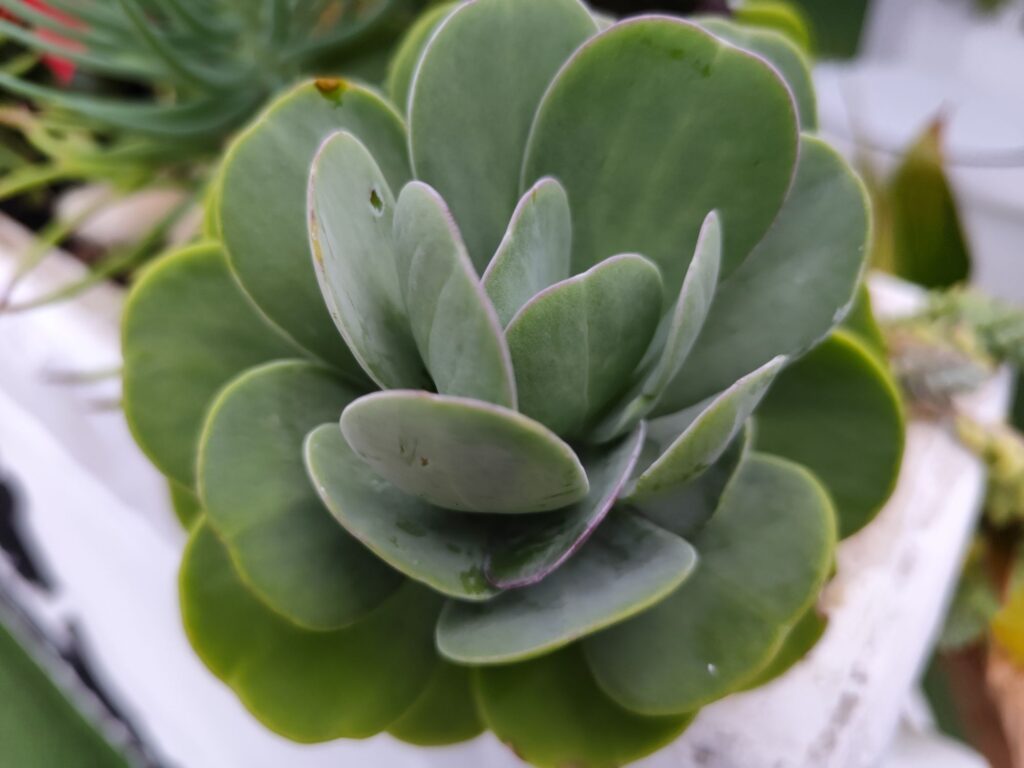
This plant forms a dense basal rosette of thick, fleshy leaves that are broad, flat, and rounded. The leaves are typically pale green to gray-green but develop striking red or reddish-purple edges under full sun exposure.
Mature plants usually reach heights of 30 to 50 centimeters, with a similar spread, creating a strong and symmetrical presence in the landscape.
Flowers and Seasonal Features
When mature, Kalanchoe luciae may produce a tall flowering stalk that rises above the rosette. The flowers are tubular, usually yellow to greenish, and appear in clusters.
After flowering, the main rosette may decline, but offsets often develop at the base, allowing the plant to continue growing.
Growth Habit and Development
This species has a slow to moderate growth rate. Growth is focused on leaf development and thickening rather than rapid vertical expansion.
Over time, it may form small clumps as new shoots emerge from the base.
Climate and Light Requirements
Kalanchoe luciae thrives in warm climates and prefers full sun to partial shade. Full sun is essential for achieving the intense red coloration on the leaves.
The plant is sensitive to frost and should be grown in frost-free regions or protected locations with mild winters.
Soil Preferences
Excellent drainage is essential for healthy growth. Kalanchoe luciae performs best in sandy, rocky, or cactus-type soils that allow excess water to drain quickly.
Heavy or poorly drained soils should be avoided to prevent root problems.
Water Requirements
Watering should be moderate and infrequent. During active growth, allow the soil to dry between watering cycles.
In cooler months, watering should be reduced significantly, as the plant enters a slower growth phase.
Maintenance and Care
This plant is very low-maintenance. Old, damaged, or discolored leaves can be removed to keep the plant looking tidy.
Fertilization is rarely necessary, though light feeding during the growing season may support healthy growth.
Safety Notice
Kalanchoe luciae is grown strictly for ornamental purposes. It should not be consumed or used for medicinal applications.
Care should be taken when planting in areas accessible to pets or children.
Uses in Landscaping
Kalanchoe luciae is widely used in dry gardens, rock gardens, and modern landscape designs. Its bold rosette form makes it ideal as a focal plant.
It is also well suited to container planting on patios, terraces, and balconies in warm climates.
Visual and Environmental Value
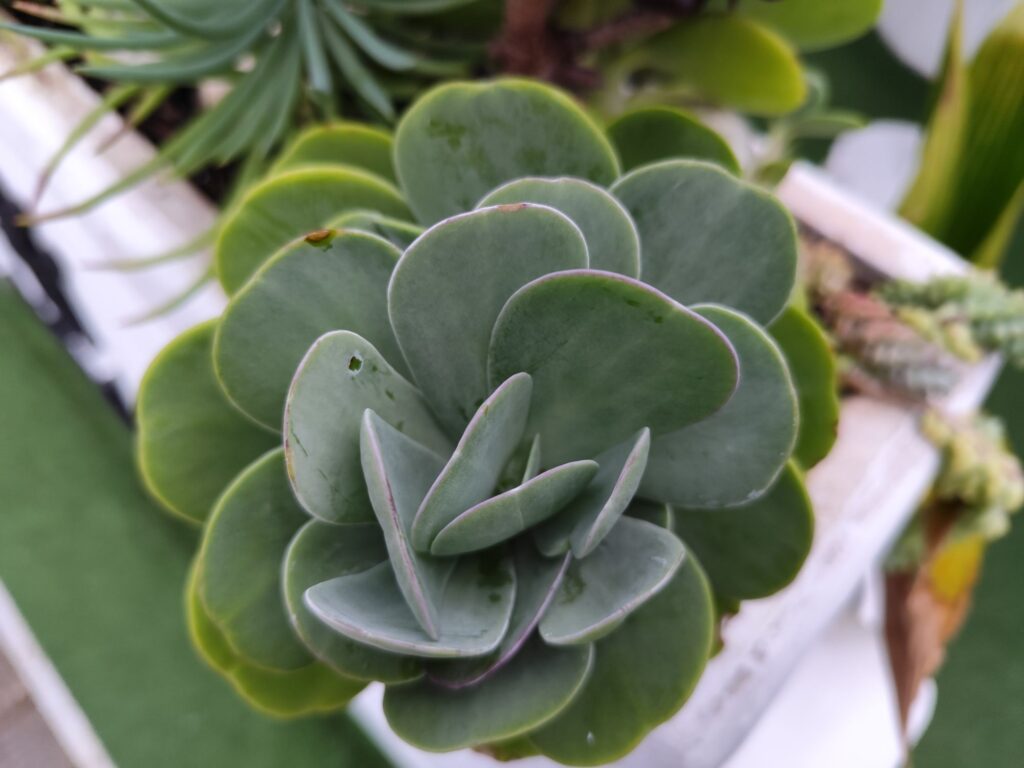
Visually, this succulent adds strong structure and color contrast to landscapes. The red-edged leaves create visual interest throughout the year.
Environmentally, it supports water-efficient gardening and low-maintenance planting strategies.
Suitability for Gardens and Containers
Kalanchoe luciae is ideal for outdoor gardens in warm climates and for container growing where drainage is excellent.
With proper sun exposure, controlled watering, and minimal care, it can remain an attractive and long-lived ornamental plant.