Introduction to Jacobaea maritima
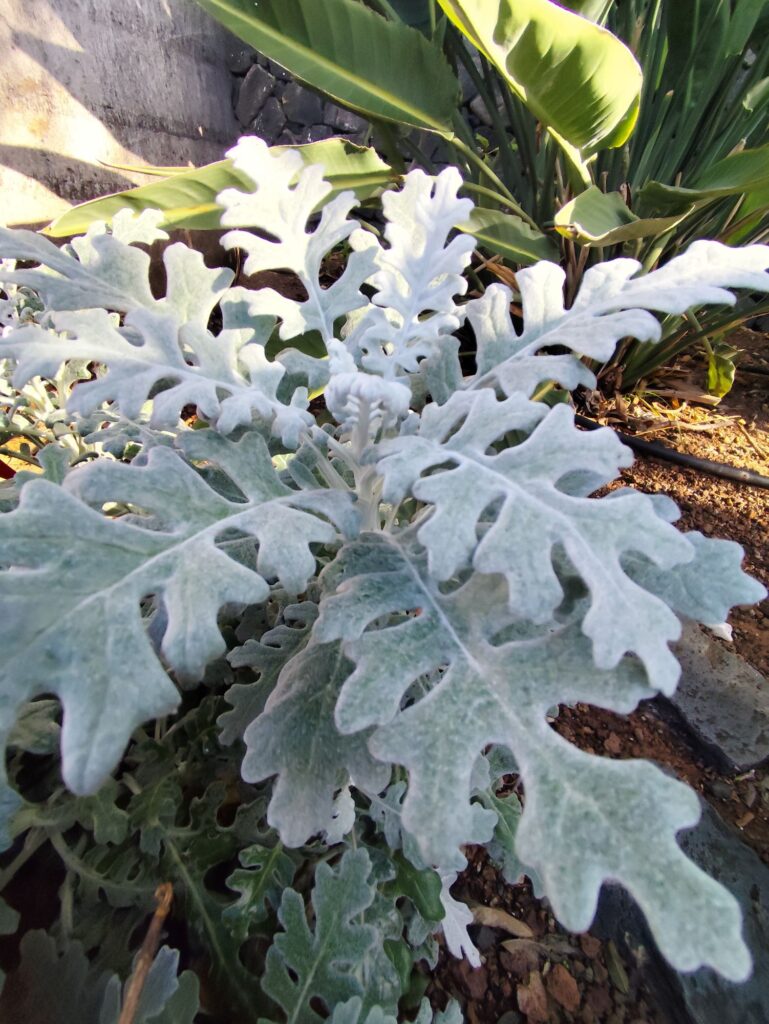
Jacobaea maritima, commonly known as dusty miller or silver ragwort, is an ornamental plant widely used in gardening for its characteristic silver-colored foliage. It belongs to the Asteraceae family and is native to coastal regions of the Mediterranean. Its bright appearance and high tolerance to adverse conditions make it a highly valued species in public spaces, private gardens, roundabouts, and similar settings.
This content has a strictly educational and botanical focus. Consumption or medicinal use of the plant is not recommended.
Botanical Classification
- Family: Asteraceae
- Genus: Jacobaea
- Species: Jacobaea maritima
- Botanical synonyms: Senecio cineraria, Senecio maritimus, etc.
- Common names: Dusty miller, silver ragwort, cineraria maritima, etc.
Physical Characteristics
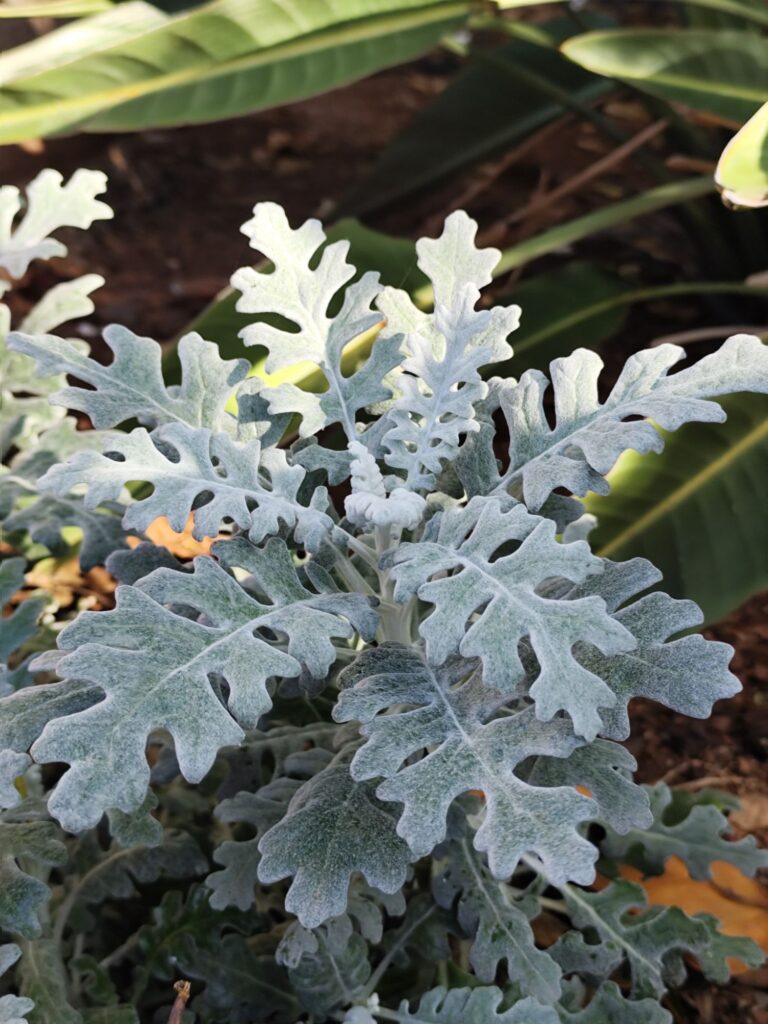
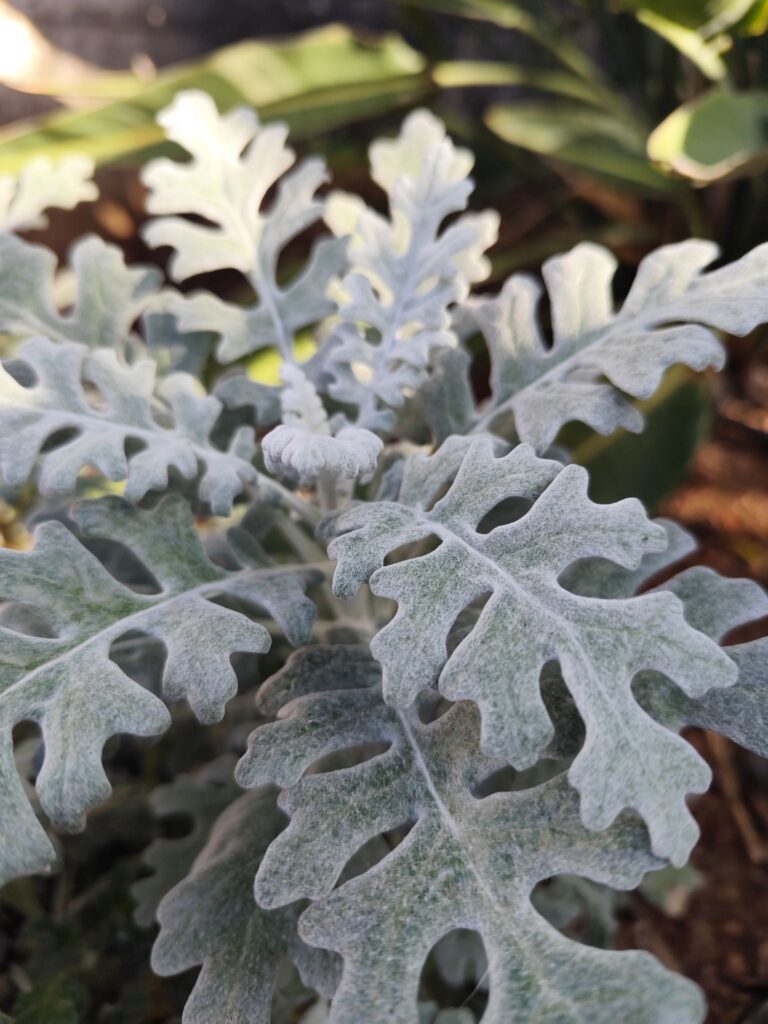
Jacobaea maritima is a low- to medium-growing perennial plant, easily recognized by its deeply lobed leaves covered with dense silvery-white hairs. This pubescence gives the plant its distinctive color and serves as protection against intense sun, wind, and salinity.
The leaves have a soft, almost velvety texture. In contrast with the foliage, the flowers are small and bright yellow, appearing in clustered inflorescences during the warm season.
Growth Habit and Size
Dusty miller has a compact and well-branched growth habit. It generally reaches between 30 and 60 centimeters in height, with a similar spread in width. Its rounded and uniform shape makes it ideal for borders, flower beds, and landscape compositions.
In mild climates it behaves as a perennial plant, while in colder regions it is often grown as an ornamental annual.
Light Requirements
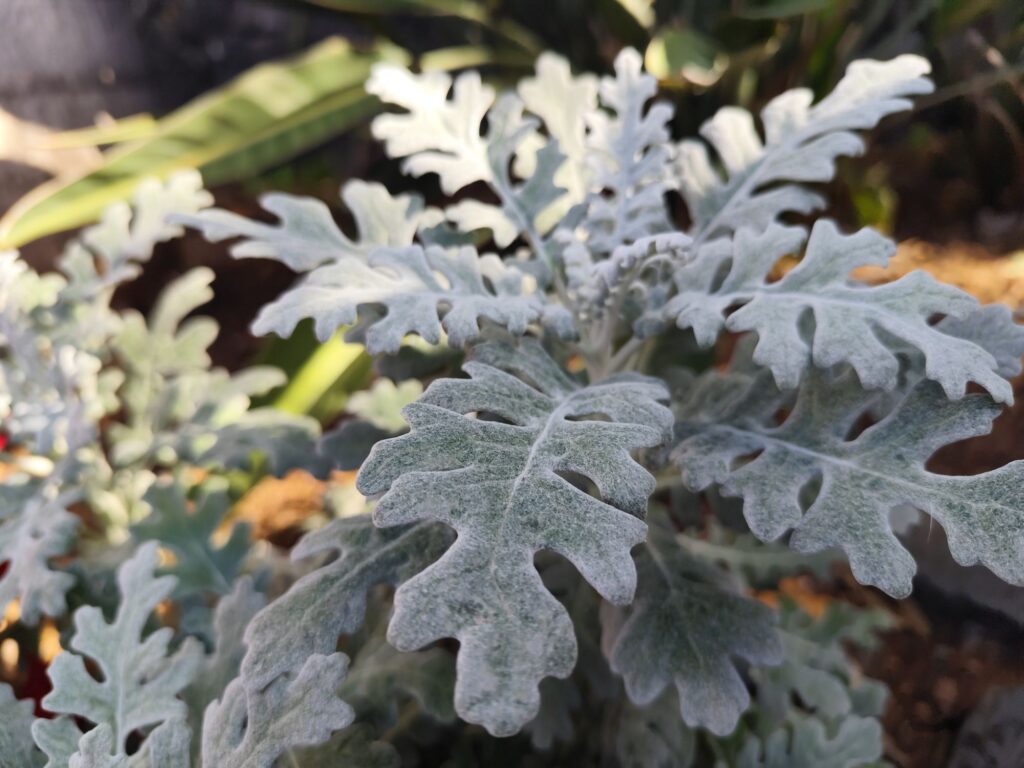
Jacobaea maritima grows best in very bright locations. It tolerates direct sun exposure well, even in coastal areas with high solar radiation. Strong light intensity enhances the silvery color of the foliage and helps maintain a compact form.
Under partial shade, the plant may survive, but the leaf color tends to become duller and growth more elongated.
Watering Needs
This species is highly drought-tolerant once established. It requires moderate watering, allowing the soil to dry out between applications. Excess moisture can negatively affect the root system.
In sustainable gardening, Jacobaea maritima is considered a low-water-use plant, especially suitable for dry and Mediterranean climates.
Substrate and Soil Type
It prefers well-drained, light, and aerated soils. It tolerates poor and sandy soils, which explains its success in coastal gardens and exposed areas.
Good drainage is essential to prevent problems related to water accumulation around the roots.
Temperature and Climate
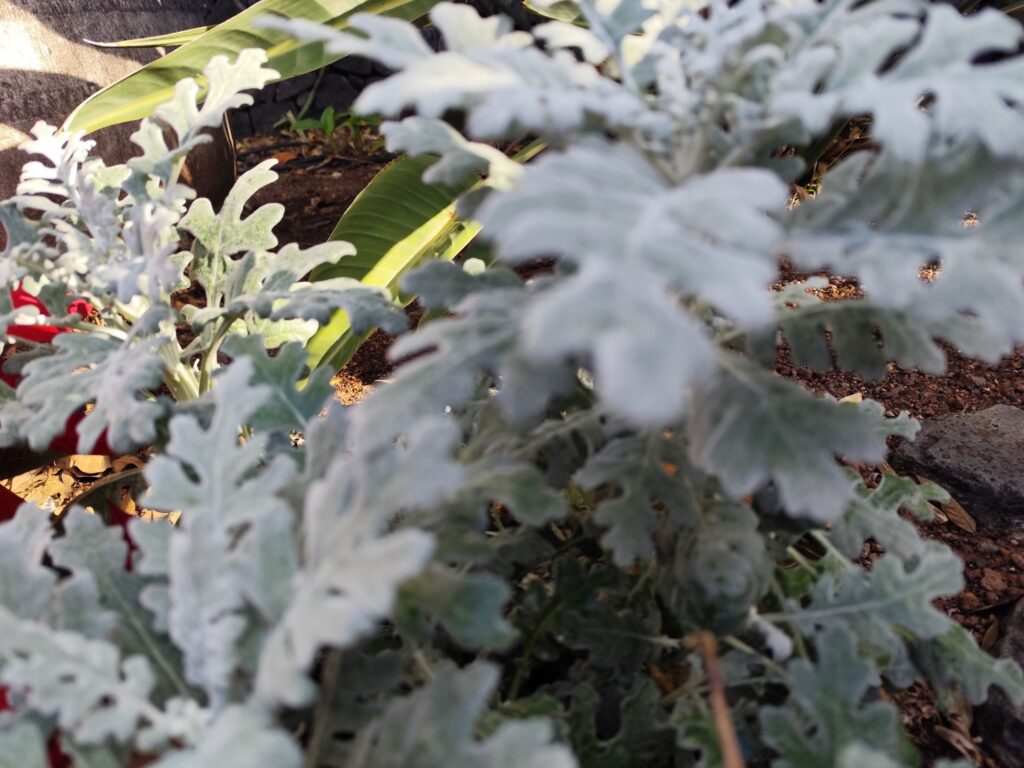
Jacobaea maritima is adapted to temperate and warm climates. It tolerates heat, wind, and saline air very well. It does not respond well to severe or prolonged frost, although it can withstand mild temperature drops.
In regions with mild winters, the plant retains its foliage throughout the year.
Flowering
Flowering usually occurs during spring and summer. The yellow flowers contrast strongly with the silver foliage, although in ornamental gardening they are often removed to preserve the compact appearance and prevent the plant from becoming leggy.
From a botanical point of view, flowering is a natural part of the plant’s life cycle.
Pruning and Maintenance
Regular pruning helps maintain a compact shape and stimulates the production of new leaves. Removing flower stems and dry parts improves the overall appearance.
Maintenance is simple, making this plant a common choice for low-maintenance gardening projects.
Propagation
Jacobaea maritima can be propagated by seeds or cuttings. Vegetative propagation allows plants with identical characteristics to the original specimen.
These methods are mainly used for ornamental and plant production purposes.
Pests and Common Problems
It is generally a resilient plant, although it may be affected under unfavorable conditions.
- Root rot caused by excessive watering
- Aphids or other insects on young shoots, etc.
- Loss of foliage color in low-light environments
Ornamental Value and Landscape Use
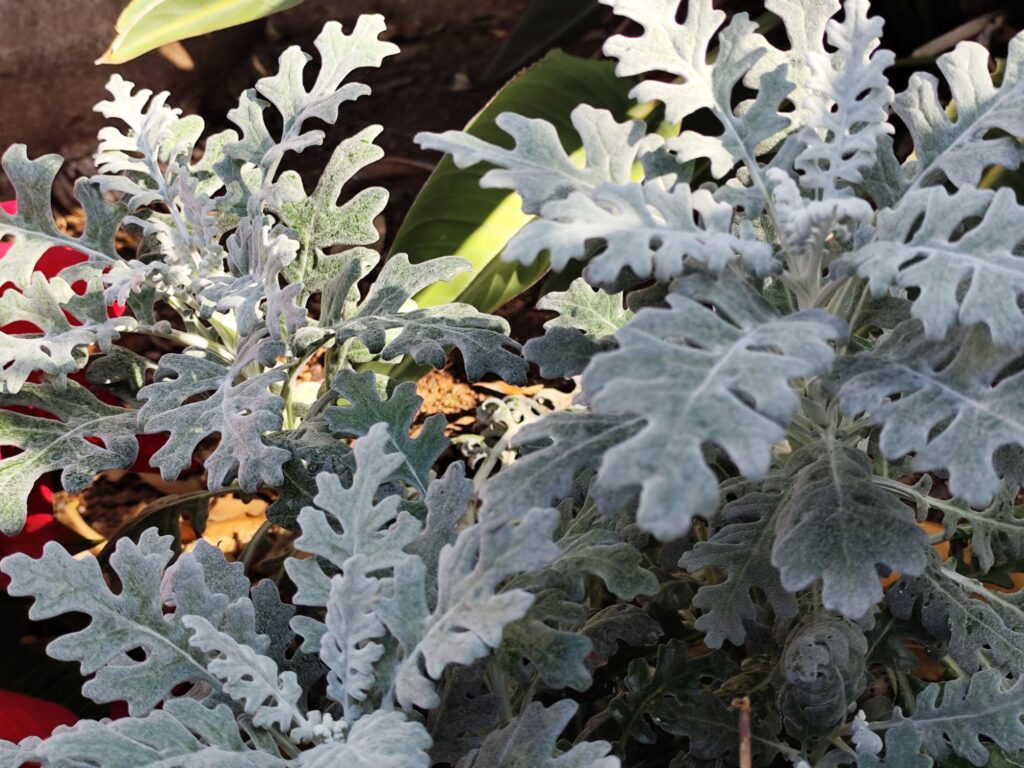
Jacobaea maritima is highly valued in landscape design for the contrast provided by its silver foliage. It is frequently used in Mediterranean gardens, coastal areas, public parks, and urban planters.
Its resilience and visual appeal make it a key plant for long-lasting and visually balanced compositions.
Toxicity and Safety Notice
Disclaimer: Jacobaea maritima is not an edible plant and is not recommended for medicinal use. It may be toxic if ingested. The information provided is strictly educational and botanical. Keep out of reach of children and pets, and consult specialized sources if any safety concerns arise.