Introduction to the Poinsettia
The poinsettia, botanically known as Poinsettia, is an ornamental plant widely recognized for its brightly colored bracts, especially red ones, traditionally associated with the winter season and end-of-year celebrations. Native to Mexico and regions of Central America, this species belongs to the Euphorbiaceae family and has been cultivated and selectively bred for decades due to its decorative value.
This content provides an educational and botanical overview of the poinsettia, addressing its characteristics, growth cycle, and general requirements. It does not promote consumption or medicinal use of the plant.
Botanical Classification
- Family: Euphorbiaceae
- Genus: Euphorbia
- Species: Euphorbia pulcherrima
- Common names: Poinsettia, Christmas star, Christmas flower, etc.
Physical Characteristics
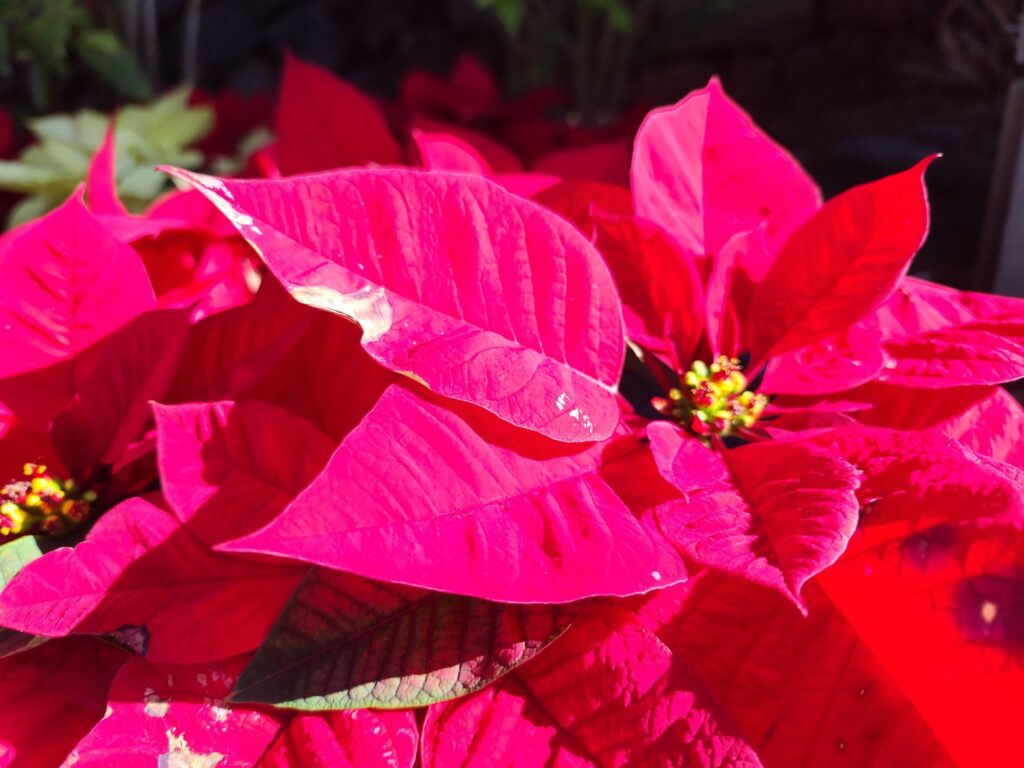
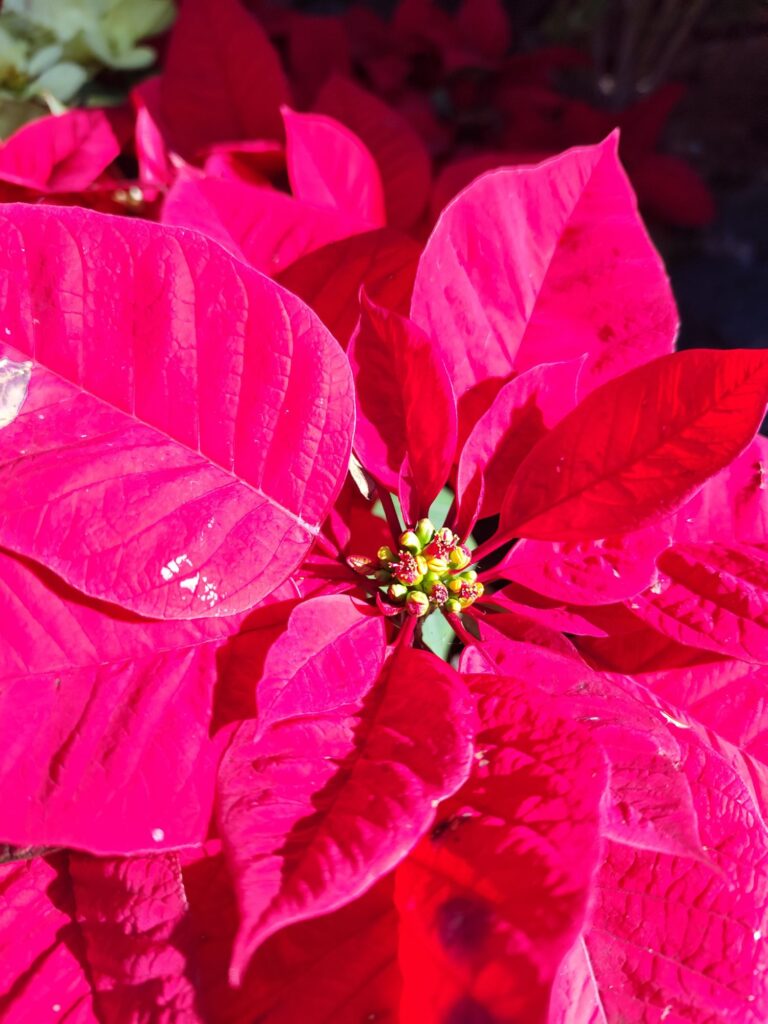
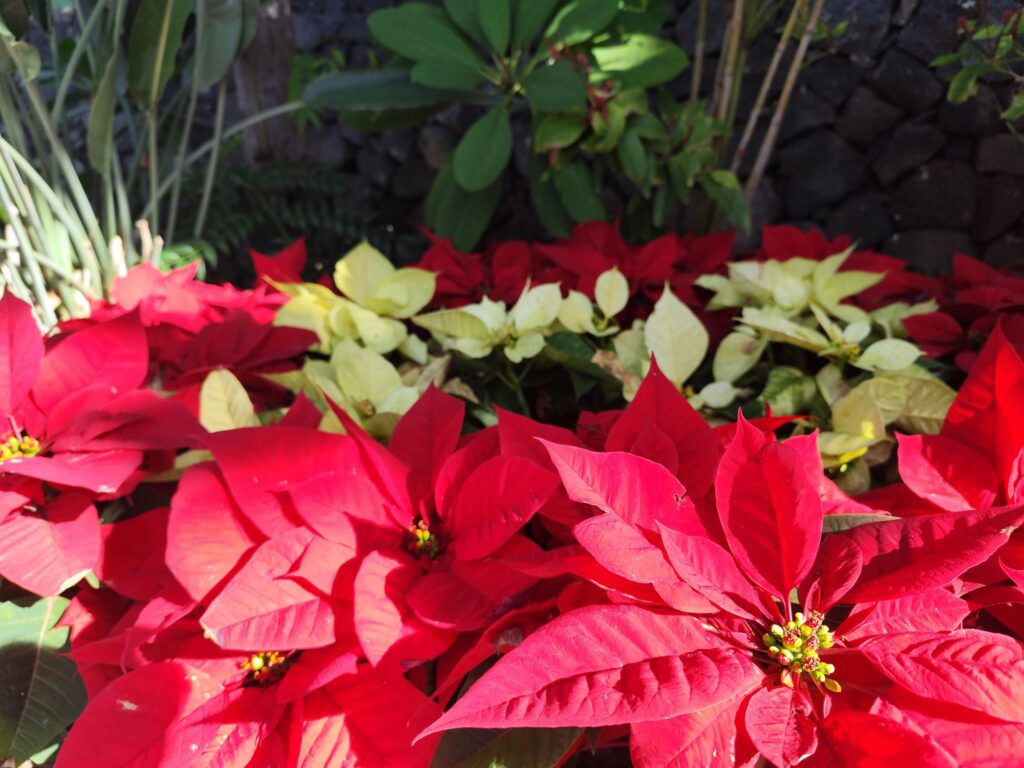
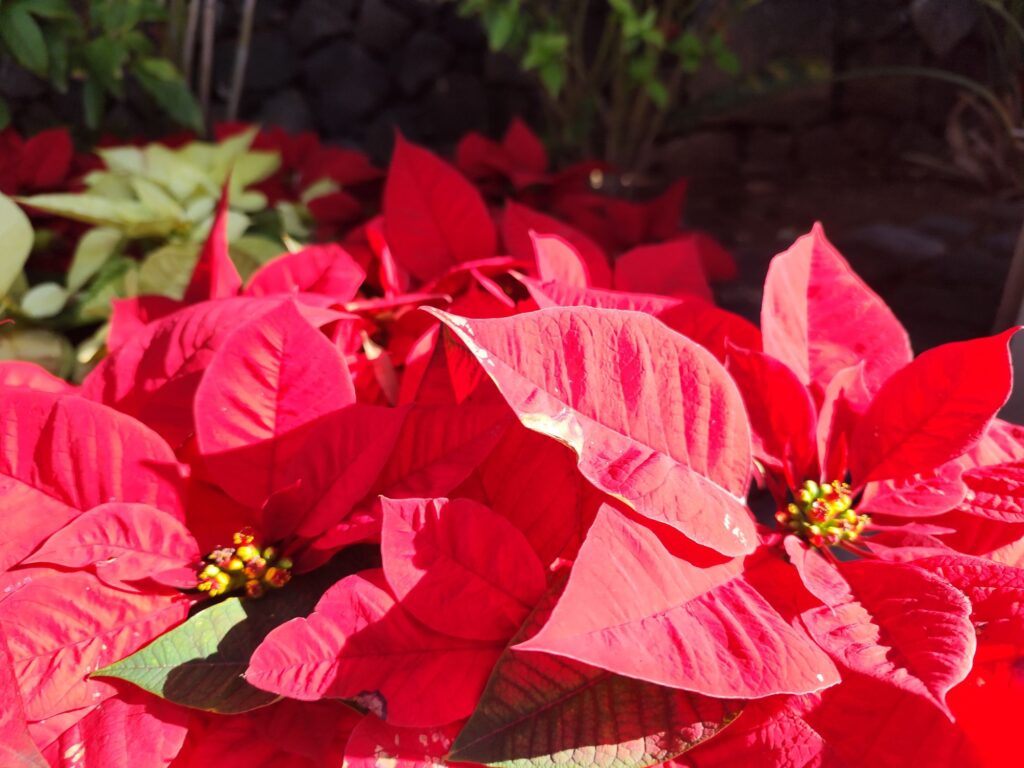
The poinsettia is a perennial shrub in its natural habitat, although in ornamental cultivation it is usually maintained at more compact sizes. Its leaves are oval, dark green, with slightly toothed edges. The most striking structures are not the true flowers, but the bracts—modified leaves that take on vivid colors such as red, white, pink, cream, and others.
The true flowers are small and grouped at the center of the bracts, forming a discreet structure known as a cyathium. This combination of colorful bracts and flowers gives the plant its characteristic visual appeal.
Growth Habit and Size
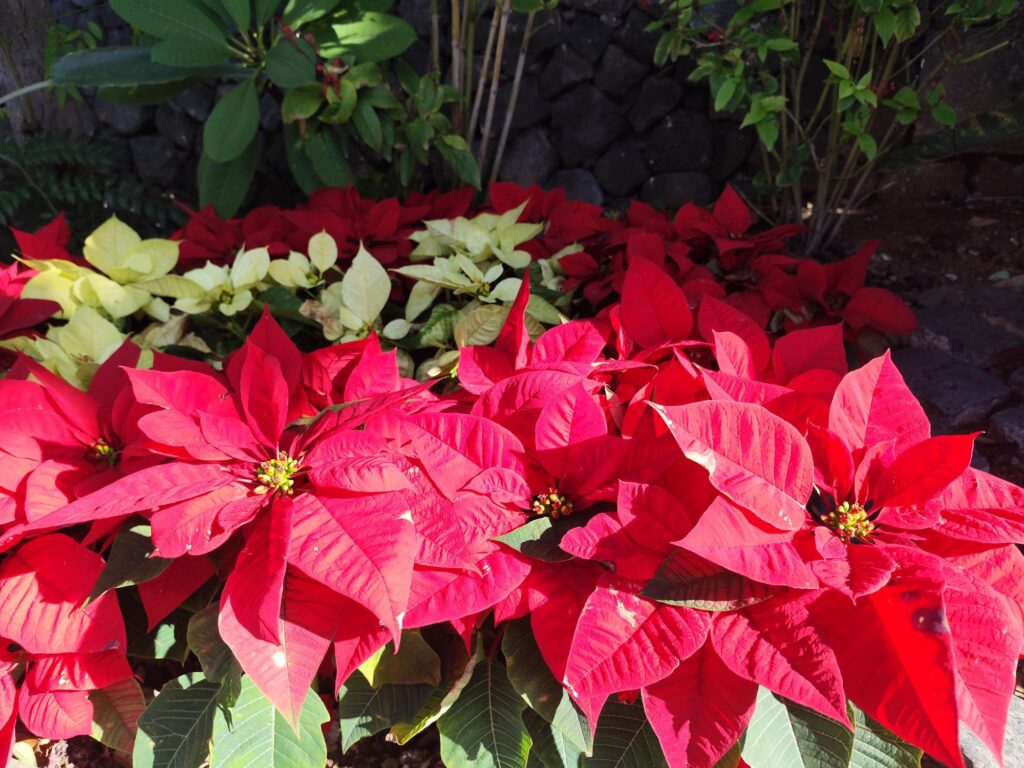
Under natural conditions, the poinsettia can reach several meters in height and grow as a woody shrub. In domestic or commercial environments, its growth is usually controlled through pruning and environmental management, typically maintaining a height between 30 and 100 centimeters.
Its growth rate is moderate and responds well to horticultural techniques used in ornamental plant production.
Light Requirements
The poinsettia prefers bright environments with indirect light. Prolonged exposure to direct sunlight can damage the leaves and cause discoloration or premature leaf drop.
From a botanical perspective, day length directly influences bract coloration. Extended periods of darkness are necessary to trigger the color change in the upper leaves.
Watering Needs
Watering should be moderate and regular. The substrate should remain slightly moist, avoiding excess water, which can cause root problems. Waterlogging is one of the most common causes of decline in this species.
During periods of reduced vegetative activity, watering requirements decrease.
Substrate and Growing Medium
A well-drained substrate rich in organic matter is ideal for healthy poinsettia growth. Proper soil aeration allows balanced root development.
Horticultural studies analyze different growing media to optimize stability, drainage, and nutrient availability.
Temperature and Environmental Conditions
The poinsettia develops best under mild and stable temperatures. It is sensitive to cold, drafts, and sudden temperature changes.
Very dry environments may cause leaf drop, while moderate humidity supports a healthier appearance.
Pruning and Maintenance
Pruning is used to control shape, stimulate branching, and maintain an appropriate size. From an ornamental perspective, pruning helps produce more compact and balanced plants.
Regular maintenance also makes it easier to observe how the plant responds to different environmental conditions.
Propagation
Poinsettia propagation is mainly carried out using stem cuttings. This method allows reproduction of plants with characteristics similar to the parent plant.
Seed propagation is less common and is usually reserved for botanical or research purposes.
Common Problems and Pests
The poinsettia may be affected by various factors that alter its appearance or vitality, especially when environmental conditions are unsuitable.
- Leaf drop due to thermal or water stress
- Pests such as whiteflies, scale insects, mites, etc.
- Fungal problems related to excessive moisture
Ornamental and Cultural Value
Beyond its botanical value, the poinsettia has strong cultural significance in many regions. It is widely used as a decorative element in interiors, public spaces, and commercial settings.
Its popularity has driven the development of numerous varieties with different colors and sizes, adapted to diverse tastes and environments.
Toxicity and Safety Notice
Disclaimer: The poinsettia contains a milky sap that may cause skin irritation or discomfort if ingested. It is not an edible plant and is not recommended for medicinal use. The information provided is strictly educational and botanical. Keep out of reach of children and pets, and consult specialized sources if any safety concerns arise.