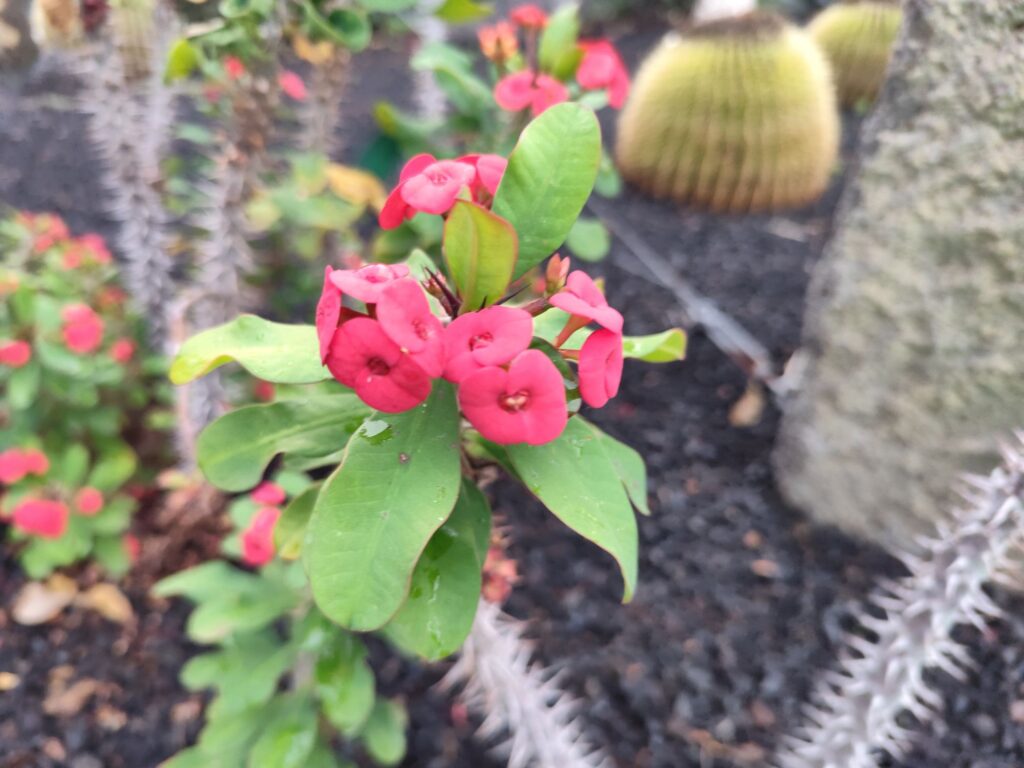
Overview of Euphorbia milii
Euphorbia milii, commonly known as the crown of thorns, is a spiny succulent shrub valued for its long-lasting colorful bracts and exceptional tolerance to heat and drought. It is widely grown as an ornamental plant in warm climates and as a container plant in protected environments.
This species is appreciated for its resilience, compact form, and ability to flower for extended periods under suitable conditions.
Natural Origin and Distribution
Euphorbia milii is native to Madagascar, where it grows in dry, rocky environments with strong sunlight and limited rainfall. Its natural habitat has shaped its ability to conserve water and tolerate harsh conditions.
Through cultivation, it has become popular in tropical, subtropical, and Mediterranean regions around the world.
Physical Characteristics

This plant forms a woody, branching shrub with thick, grayish stems covered in sharp spines. The spines provide natural protection and give the plant its common name.
The leaves are small, oval, and green, often concentrated near the tips of the stems. The true flowers are small and inconspicuous, while the colorful parts commonly mistaken for flowers are actually bracts, which can be red, pink, yellow, orange, or cream.
Flowering and Seasonal Interest
Euphorbia milii is known for its long flowering season. In warm climates, it can bloom almost year-round, especially when grown in bright light.
The persistent bracts provide continuous color, making the plant attractive even outside peak flowering periods.
Growth Habit and Development
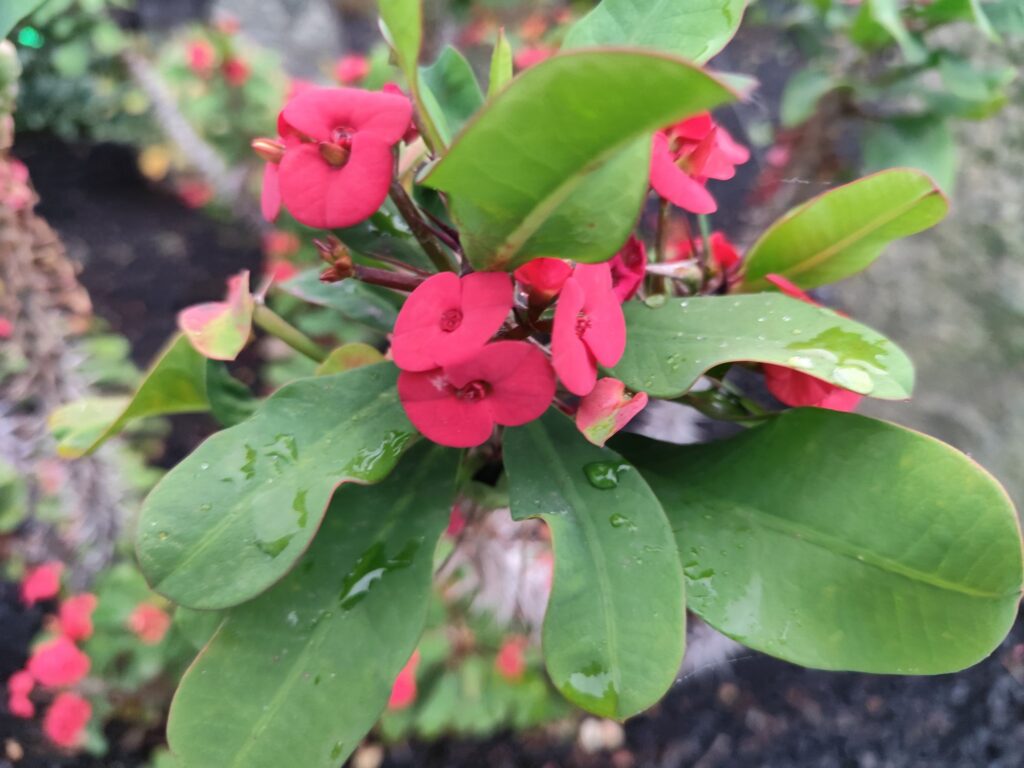
This species has a moderate growth rate and typically reaches heights of 60 to 120 centimeters, depending on growing conditions and pruning.
Its branching habit allows it to form a dense, rounded shrub over time.
Climate and Light Requirements
Euphorbia milii thrives in warm climates and prefers full sun to very bright light. Full sun promotes compact growth and abundant flowering.
The plant is sensitive to frost and should be grown in frost-free regions or protected during cold periods.
Soil Preferences

Excellent drainage is essential for healthy growth. Euphorbia milii performs best in sandy, rocky, or cactus-type soils that allow excess water to drain quickly.
Heavy or poorly drained soils should be avoided, as they can lead to root problems.
Water Requirements
Watering should be moderate and controlled. Allow the soil to dry out between watering cycles, especially during cooler periods.
Once established, the plant is highly drought-tolerant and prefers dry conditions over excess moisture.
Maintenance and Care
This plant is low-maintenance. Occasional pruning helps maintain shape and encourages branching and flowering.
Protective gloves are recommended when handling the plant due to its spines and milky sap.
Safety and Toxicity Notice

Euphorbia milii produces a milky latex sap that can cause skin and eye irritation. All parts of the plant are toxic if ingested.
It should not be consumed or used for medicinal purposes and should be planted with care in areas accessible to children or pets.
Uses in Landscaping
Euphorbia milii is widely used in dry gardens, rock gardens, and container plantings. Its spiny structure also makes it suitable as a barrier or deterrent planting.
It is especially effective as a focal plant in sunny locations where long-lasting color is desired.
Visual and Environmental Value

Visually, the crown of thorns adds strong color contrast and texture to landscapes. Its flowers provide interest throughout much of the year.
Environmentally, it supports low-water landscaping and drought-conscious garden design.
Suitability for Gardens and Containers

Euphorbia milii is ideal for outdoor gardens in warm climates and for container growing in bright, protected locations.
With full sun, excellent drainage, and minimal watering, it can remain a long-lived and highly decorative ornamental plant.