Introduction to Euphorbia ingens
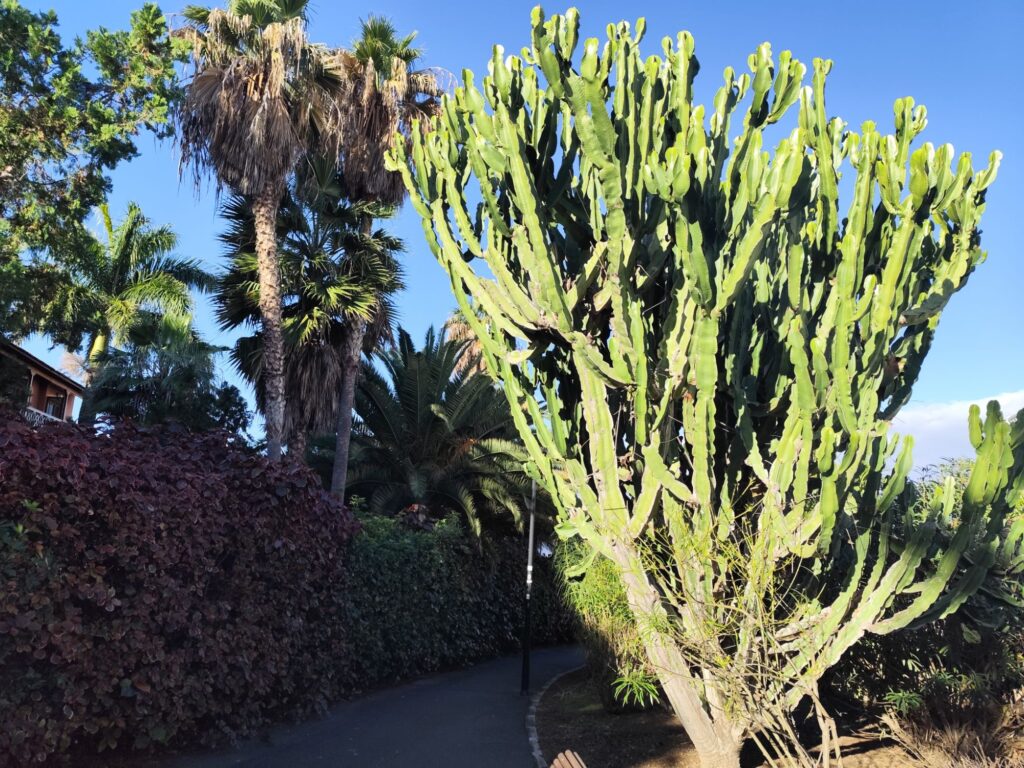
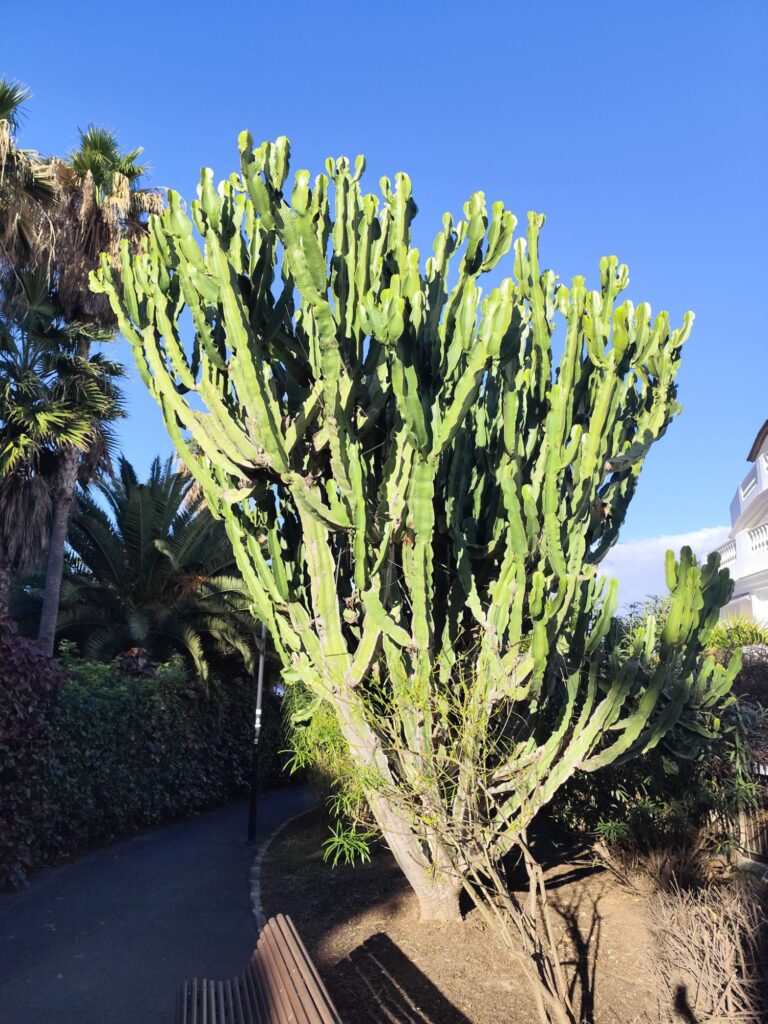
Euphorbia ingens, commonly known as the candelabra tree, is a large succulent plant native to southern Africa. It is widely recognized for its tall, upright, branching structure that resembles a candelabra, giving rise to its common name. Although it is often mistaken for a cactus due to its appearance, Euphorbia ingens belongs to the Euphorbiaceae family and is botanically distinct from true cacti.
This plant is cultivated primarily for ornamental and educational purposes in gardens, botanical collections, landscapes, etc. The following information focuses on its botanical characteristics, growth behavior, and environmental requirements, without promoting any form of consumption or medicinal use.
Botanical Classification
- Family: Euphorbiaceae
- Genus: Euphorbia
- Species: Euphorbia ingens
- Common names: Candelabra tree, African milk tree, etc
Physical Characteristics
Euphorbia ingens is a tree-like succulent that can reach significant heights in its natural habitat. It typically features a central trunk with multiple upward-growing branches that divide repeatedly, creating a symmetrical and architectural form.
The stems are thick, ribbed, and green, allowing the plant to perform photosynthesis efficiently. Small, short-lived leaves may appear near the growing tips, but these usually fall off quickly. Spines are present along the ridges, although they are generally less pronounced than those found on many cactus species.
Growth Habit and Size
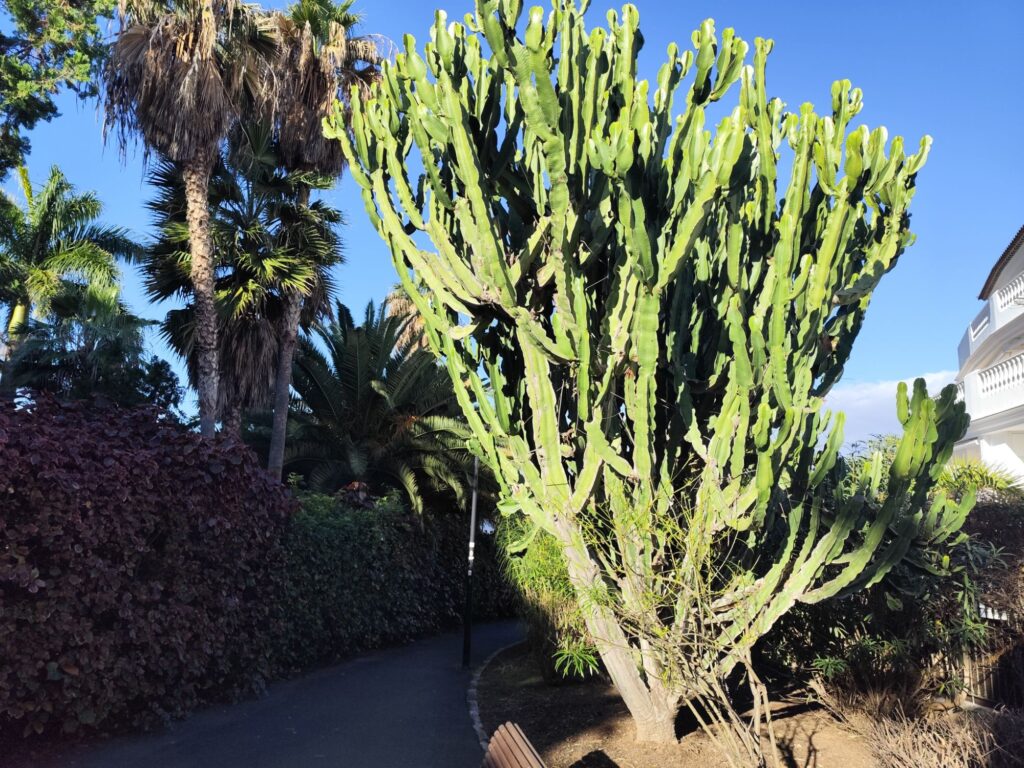
In outdoor environments with suitable climates, Euphorbia ingens can grow into a large tree several meters tall. In cultivation, especially in containers or controlled settings, its size is usually more restricted.
The plant has a relatively slow to moderate growth rate. Its strong vertical form makes it a striking focal point in landscapes and architectural plant designs.
Light Requirements
Euphorbia ingens thrives in bright light conditions. In its native environment, it is exposed to abundant sunlight for most of the day. When grown in cultivation, it adapts well to full sun or very bright indirect light.
Gradual acclimation is important when moving the plant between different light conditions, as sudden changes can stress the stems or cause surface damage.
Watering Needs
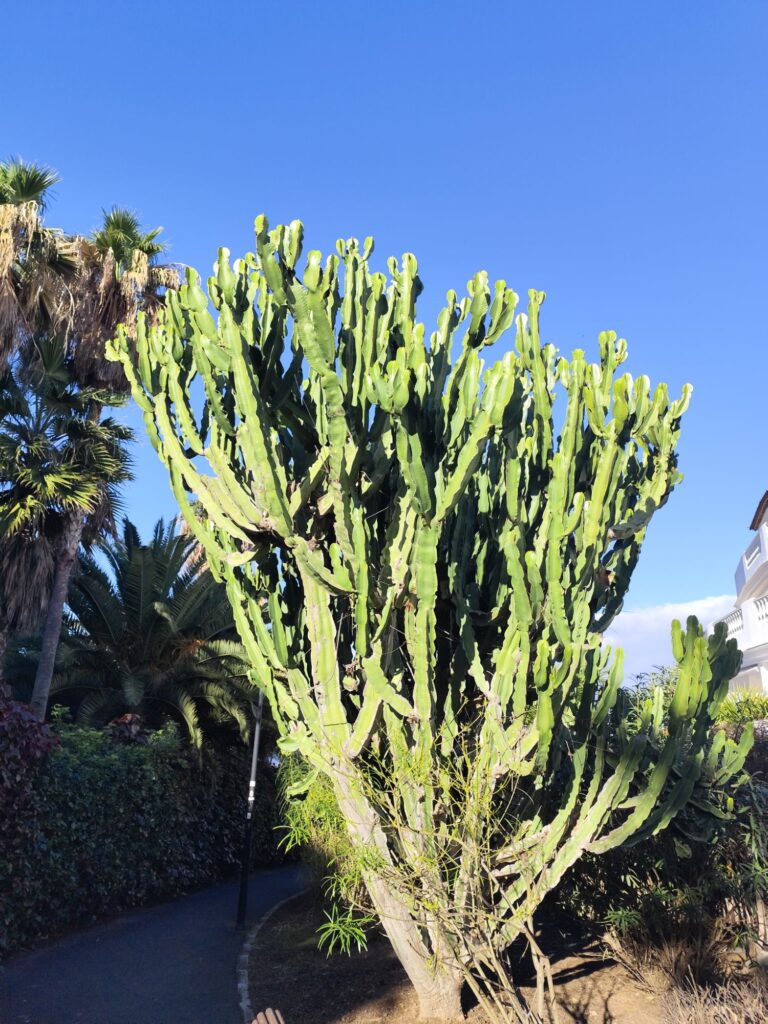
As a succulent species, Euphorbia ingens is adapted to periods of drought. It stores water in its thick stems and requires infrequent watering compared to non-succulent plants.
Watering should be spaced to allow the growing medium to dry out completely between applications. Excess moisture, especially in cooler conditions, can lead to root or stem issues.
Soil and Growing Medium
Well-draining soil is essential for healthy growth. A sandy or mineral-rich substrate that allows water to pass through quickly is commonly used in cultivation.
Good drainage helps prevent prolonged moisture around the roots, which is one of the most common causes of decline in this species.
Temperature and Climate Preferences
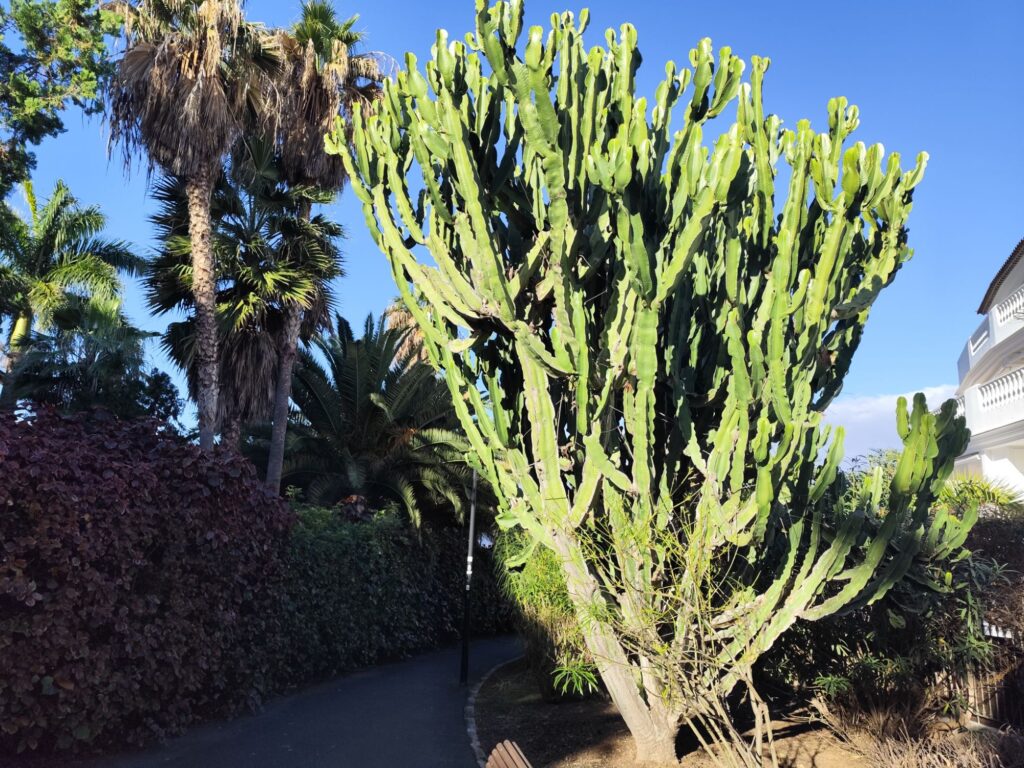
Euphorbia ingens prefers warm temperatures and is not frost-tolerant. It is best suited to arid or semi-arid climates with mild winters.
In cooler regions, the plant is often grown indoors or in greenhouses to protect it from low temperatures and excessive moisture.
Latex Sap and Plant Chemistry
A defining characteristic of Euphorbia ingens is its milky white latex sap, which is released when the plant is cut or damaged. This sap serves as a natural defense mechanism against herbivores.
From a botanical and ecological perspective, this latex plays an important role in the plant’s survival, but it also presents safety considerations for handling.
Propagation Methods
Propagation is most commonly carried out through stem cuttings. Cut surfaces must be allowed to dry and form a callus before planting to reduce the risk of rot.
This process is typically discussed in horticultural and research contexts rather than casual cultivation.
Common Problems and Pests
When grown in appropriate conditions, Euphorbia ingens is relatively resistant to pests and diseases. However, environmental stress can lead to issues.
- Root or stem rot caused by excess moisture
- Pests such as mealybugs or scale insects, etc
- Sun damage due to sudden exposure changes
Ornamental and Landscape Value
The candelabra tree is widely used in landscaping and architectural plant design due to its dramatic form and low maintenance requirements. It is commonly seen in dry gardens, botanical gardens, and large open spaces where its size and shape can be fully appreciated.
Toxicity and Safety Disclaimer
Disclaimer: Euphorbia ingens produces a toxic latex sap that can cause skin irritation, eye injury, and other health issues if mishandled or ingested. This plant is not edible and is not recommended for medicinal use. All information provided here is for educational and botanical purposes only. Avoid direct contact with sap, keep away from children and pets, and follow local safety guidelines.