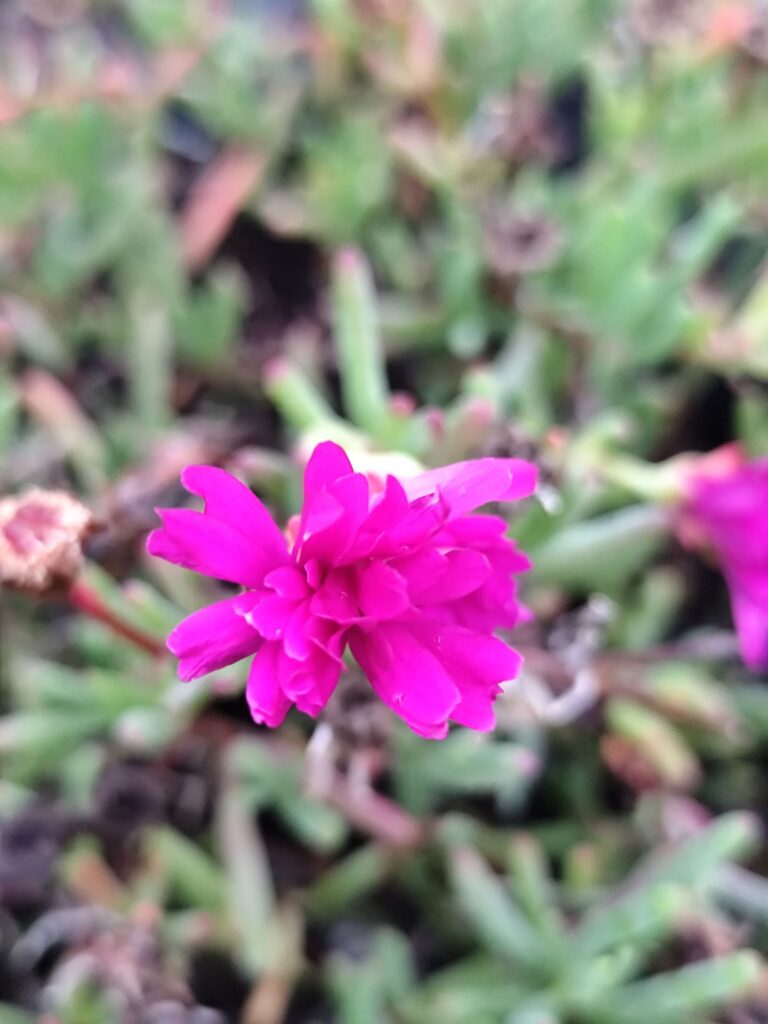
Overview of Delosperma cooperi
Delosperma cooperi, commonly known as the ice plant or pink carpet, is a low-growing succulent ground cover admired for its vibrant, daisy-like flowers and excellent drought tolerance. It is widely used in warm and temperate climates for covering soil quickly while adding strong seasonal color.
This plant is especially valued in water-efficient gardens, slopes, and sunny borders where low maintenance and long flowering periods are desired.
Natural Origin and Distribution
Delosperma cooperi is native to southern Africa, where it grows in rocky, open landscapes with intense sunlight and minimal rainfall. Its natural habitat includes dry plains and slopes with well-drained soils.
Due to its adaptability and ornamental appeal, it has been widely cultivated in Mediterranean, subtropical, and temperate regions around the world.
Physical Characteristics
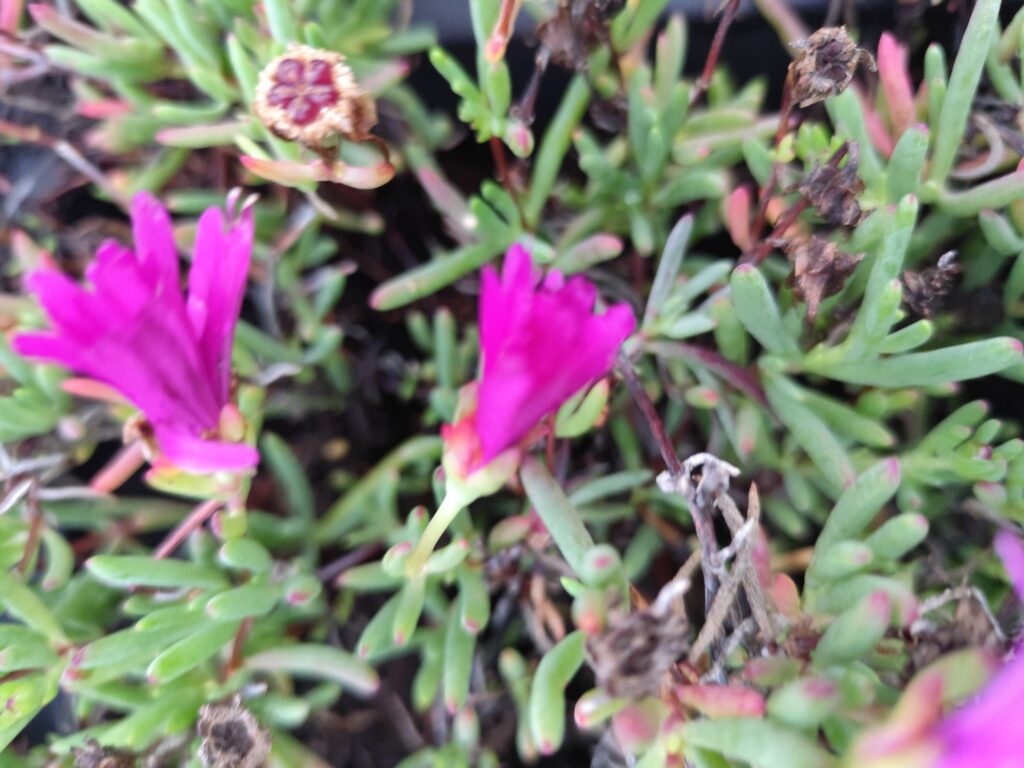
This species forms dense, spreading mats composed of fleshy, narrow leaves that are bright green and cylindrical to slightly flattened. The leaves store water, allowing the plant to survive prolonged dry periods.
The flowers are bright pink to magenta, with a glossy, shimmering appearance that gives rise to the common name “ice plant.” Each flower opens fully in sunlight.
Flowering and Seasonal Interest
Delosperma cooperi is known for its long and abundant flowering season. In suitable climates, blooming begins in late spring and can continue through summer and into early autumn.
The flowers close at night or during cloudy weather and reopen in full sun, creating a dynamic visual effect.
Growth Habit and Development
This plant has a fast growth rate and spreads horizontally to form a dense carpet. It typically reaches a height of 10 to 15 centimeters while spreading much wider.
Its spreading habit makes it ideal for erosion control and for filling open spaces efficiently.
Climate and Light Requirements
Delosperma cooperi thrives in warm climates and performs best in full sun. Bright sunlight is essential for strong flowering and compact growth.
It tolerates heat very well and can withstand light frost once established, making it more cold-tolerant than many other succulents.
Soil Preferences
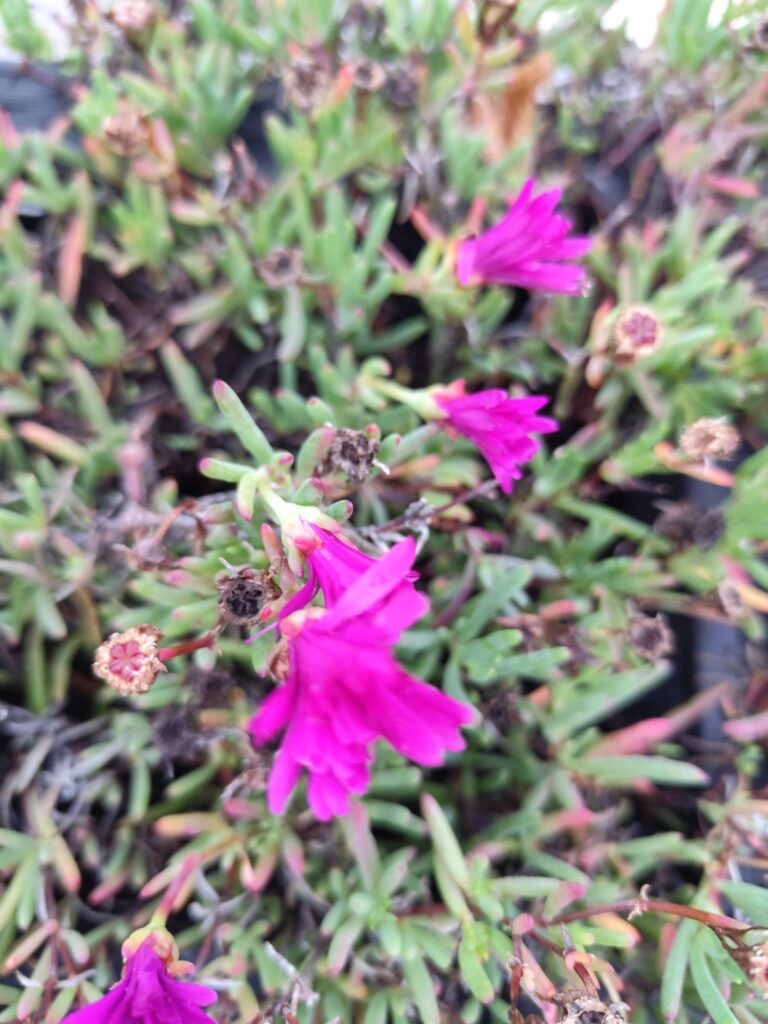
Excellent drainage is essential for healthy growth. Delosperma cooperi prefers sandy, rocky, or gravelly soils that do not retain excess moisture.
Heavy or waterlogged soils should be avoided, as they can lead to root problems.
Water Requirements
Once established, this plant is highly drought-tolerant. Watering should be occasional, allowing the soil to dry completely between watering cycles.
Excessive watering can reduce flowering and negatively affect plant health.
Maintenance and Care
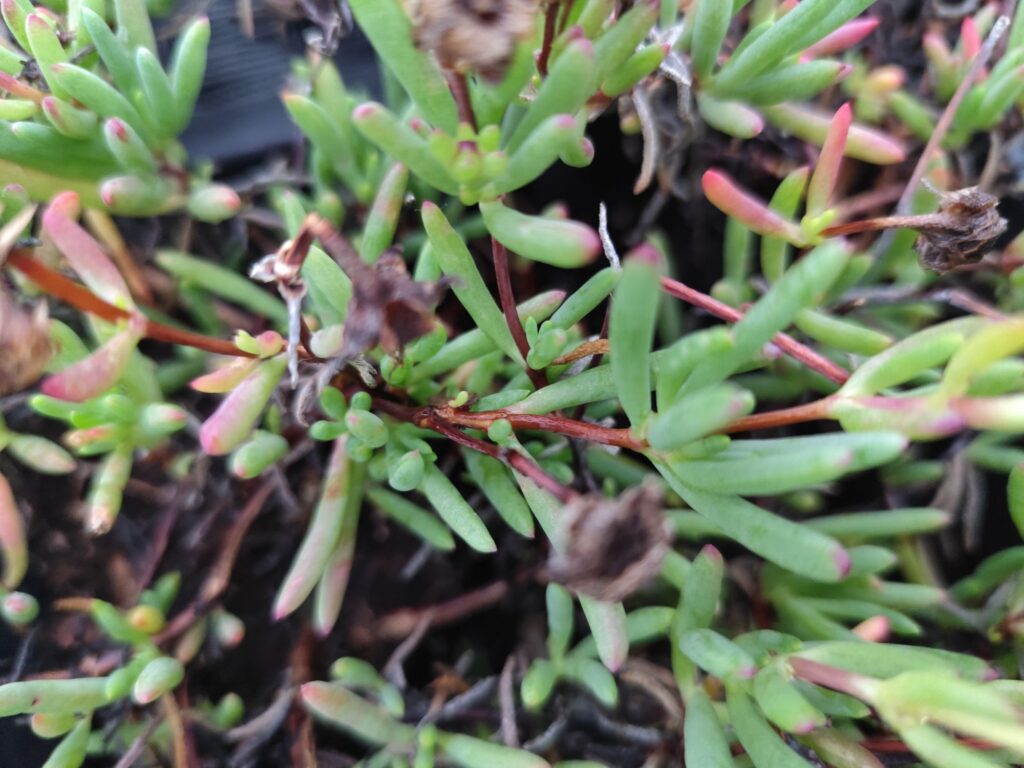
Delosperma cooperi is very low-maintenance. It does not require regular pruning, though trimming may be done to control spread or refresh appearance.
Fertilization is rarely necessary, as the plant performs well in poor soils.
Safety Notice
This plant is grown strictly for ornamental purposes. It should not be consumed or used for medicinal applications.
Standard gardening care is sufficient when handling the plant.
Uses in Landscaping
Delosperma cooperi is widely used as ground cover in rock gardens, slopes, borders, and along pathways. It is also common in public landscaping due to its durability and low water needs.
It works particularly well in Mediterranean-style and xeriscape garden designs.
Visual and Environmental Value
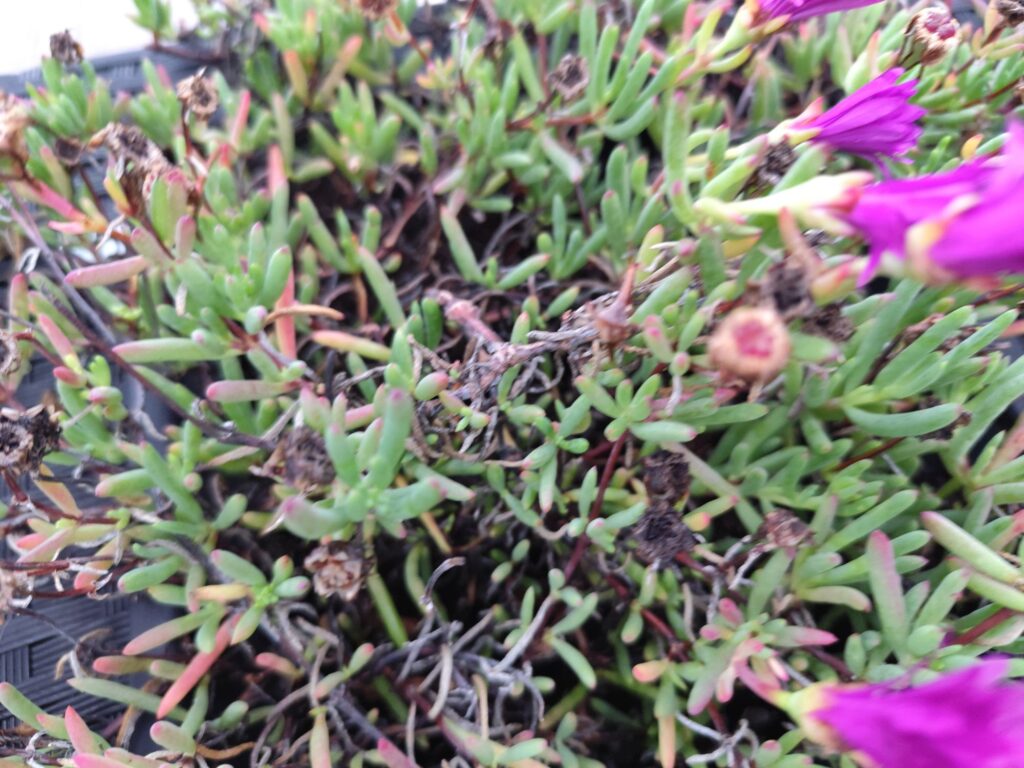
Visually, the ice plant adds intense color and texture to landscapes during its flowering season. The contrast between bright flowers and fleshy foliage is highly decorative.
Environmentally, it supports water-efficient gardening and helps reduce soil erosion on slopes.
Suitability for Gardens and Containers
Delosperma cooperi is ideal for gardens in sunny locations with good drainage. It is suitable for open ground, raised beds, and large containers.
With full sun, minimal watering, and well-drained soil, it can provide long-lasting ground cover and vibrant seasonal color.